
Most people quit plant-based eating within the first three weeks. Not because the food is bad — because they open the fridge on a Wednesday night, find nothing ready, and order takeout instead.
Meal prep is the fix. But most beginner guides either overwhelm you with 47-step Sunday routines or skip the parts that actually matter — like where your protein is coming from and why your vegetables turn to mush by Thursday. Here’s what actually holds up.
What Plant-Based Meal Prep Actually Looks Like
Choosing your approach before you start
“Plant-based” gets used loosely. Some people mean fully vegan. Others mean 80% plants with occasional eggs or fish. Your prep strategy shifts meaningfully depending on which you’re doing.
| Approach | What’s included | Prep complexity | Protein challenge |
|---|---|---|---|
| Fully vegan | Legumes, grains, tofu, tempeh, nuts, seeds, vegetables | Medium-high | High — requires deliberate planning |
| Plant-forward (eggs ok) | Above + eggs, occasional dairy | Medium | Moderate |
| Flexitarian | Mostly plants, fish 1-2x per week | Low-medium | Low |
This guide focuses on fully plant-based prep — the hardest mode. If you can handle this, every other approach is simpler.
The component method vs. full meals
Prepping five identical grain bowls and stacking them in containers sounds efficient. By Wednesday, you hate looking at them.
The component method works better. Prep building blocks separately — cooked grains, roasted vegetables, batch-cooked legumes, two or three sauces — then mix them into different combinations each day. Same prep time. Far more variety. You’re assembling a fresh meal from prepped parts, not reheating a dish that was designed four days ago.
How to Run Your First Two-Hour Prep Session
The order of operations
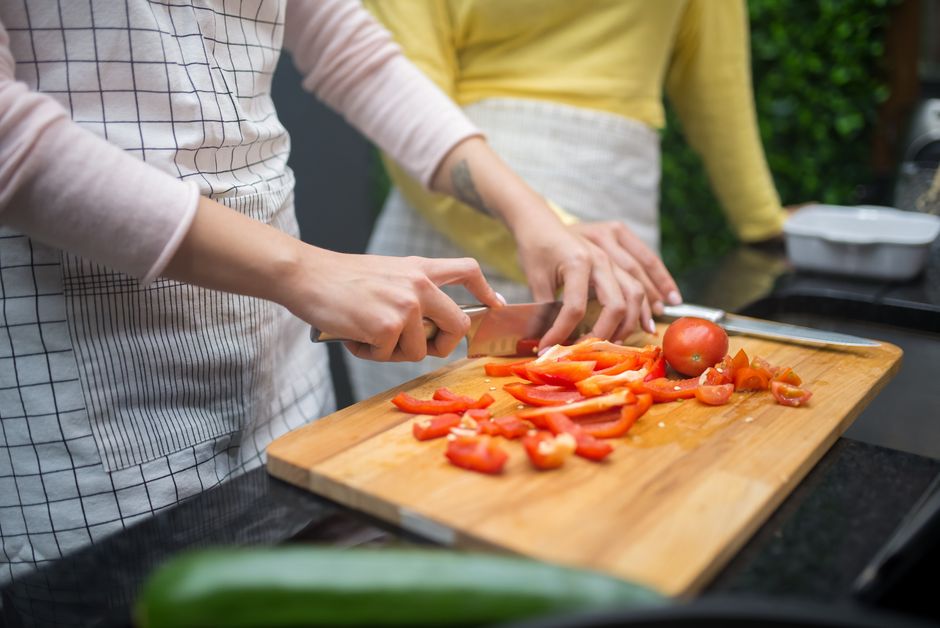
Start with what takes longest, not what sounds most exciting.
- Grains first (5 minutes active, 40 minutes passive): Get a pot of brown rice, farro, or quinoa on the stove immediately. One cup dry grain yields roughly 3 cups cooked — about 6 servings. Walk away.
- Hard vegetables into the oven second: Sweet potato, beetroot, and carrots at 220°C take 35 minutes. Get them on a sheet pan now.
- Legumes third: Drain and rinse canned chickpeas, then roast at 200°C for 25 minutes with olive oil and cumin. Crispy chickpeas last 4 days — store them in an open container, not sealed (sealed makes them go soft within hours).
- Soft vegetables fourth: Broccoli, courgette, and pepper at 200°C for 20 minutes. Slide these in partway through the hard vegetable cook time.
- Sauces last: A tahini-lemon sauce takes 3 minutes. A miso-ginger dressing takes 2. These are what separate a meal you want to eat from a meal you eat out of obligation.
Storage that preserves texture
Keep grains and legumes stored separately from roasted vegetables. Moisture transfers fast when they’re mixed together, and everything turns soggy within 24 hours. Glass containers with airtight lids work best for anything you’re eating within 4 days. Small glass jars handle sauces and smaller portions well — they stack, they seal, and they make it easy to see what you have at a glance.
The Plant-Based Protein Problem Nobody Warns You About
This is the section most guides skip — and it’s exactly why people feel exhausted and hungry by day three.
A 150lb (68kg) person doing moderate exercise needs roughly 75–100g of protein daily. Here’s what that looks like from plant sources:
- 170g package Lightlife Tempeh: 30g protein — the most protein-dense whole-food plant option per serving
- 1 cup cooked lentils: 18g protein
- 1 cup cooked edamame: 17g protein
- 1 cup cooked black beans: 15g protein
- 3 tbsp hemp seeds: 10g protein
- 100g firm tofu: 8g protein
The verdict: deliberate protein at every meal. One cup of rice and roasted vegetables is a side dish. Add crumbled tempeh, a scoop of chickpeas, or a handful of edamame to every bowl, and budget 3–4 different protein sources into each week’s prep.
Tools Worth Buying vs. Things That Collect Dust
The full comparison
The actual starting kit
Two Nordic Ware sheet pans, a set of OXO glass containers, and a Lodge cast iron. Add the Instant Pot after you’ve prepped four or five times and you’re committed to dried legumes over canned.
Five Mistakes That Kill Beginner Meal Prep Attempts
Prepping full meals instead of components
Five identical grain bowls look great on Sunday. By Wednesday, seeing that same bowl triggers resistance. Components stay flexible; pre-assembled identical meals don’t.
Ignoring flavour systems
Unseasoned roasted broccoli is not a meal anyone wants by Thursday. Every prep session needs at least two distinct flavour profiles — a tahini-lemon sauce and a soy-ginger dressing, for example. Same base vegetables, two completely different experiences across the week.
Cutting too much produce too early
Cut vegetables spoil faster than whole ones. Pre-cut spinach lasts 3–4 days. A whole pepper lasts 1–2 weeks in the fridge. Only cut what you’ll eat within 3 days. Pre-wash and dry leafy greens, but leave peppers, cucumbers, and broccoli intact until you need them.
Underestimating caloric density
Plants are nutrient-dense but often calorie-light. A salad with chickpeas and tahini looks substantial but might clock in at 400 calories. Constant hunger on plant-based eating usually means not eating enough — more legumes, avocado, nuts, and olive oil, not just more salad.
No backup protein in the pantry
Always keep shelf-stable protein within reach. Bob’s Red Mill green lentils cook in 20 minutes without soaking. Canned chickpeas take 90 seconds to rinse and use. Frozen edamame takes 5 minutes. These are your mid-week emergency proteins when prep runs out.
Building a Weekly Rotation That Doesn’t Bore You
How many different meals should I prep each week?
Three is the sweet spot. Enough variety to avoid monotony, few enough that prep stays manageable. A realistic week: one grain bowl base, one soup or stew, one wrap situation. Mix components between them and nothing feels repetitive.
What does a sustainable weekly schedule actually look like?
Sunday: 2 hours for the main batch. Wednesday: 20–30 minutes to refresh whatever has run out — a quick batch of lentils, a new sauce, some freshly roasted vegetables. That’s it. You don’t need to do everything on a single day every week.
Do I need to track macros?
For your first four weeks: yes. Use Cronometer (free app) to log meals and check where protein, iron, and B12 actually land. After a month, you’ll have an intuitive sense of what a day of plant-based eating looks like nutritionally. Most beginners discover they’re consistently under on protein and over on carbohydrates until they see the numbers in front of them.
Stocking a Plant-Based Pantry Before You Start
The non-negotiables
Plant-based meal prep lives or dies by the pantry. A well-stocked pantry means you can build a solid meal even when you forgot to shop. These are the staples that make everything else possible:
- Grains: Brown rice, farro, quinoa — all cook ahead and reheat well without turning gluey
- Legumes: Canned chickpeas, canned black beans, dried green lentils, dried red lentils
- Fats: Olive oil, tahini, raw cashews (for blended sauces), full-fat coconut milk
- Aromatics: Garlic, ginger (buy a large piece and freeze it — grate directly from frozen), yellow onion
- Acid: Lemon juice, apple cider vinegar, rice vinegar — plant food tastes flat without enough acid
- Umami builders: Tamari (gluten-free soy sauce), nutritional yeast, white miso paste
- Core spices: Cumin, smoked paprika, turmeric, coriander, red pepper flakes
Where to source affordably
For fresh produce, farmers markets typically beat grocery store pricing on seasonal vegetables by 30–40%. Stock the pantry through Thrive, buy fresh produce locally, and you remove the two biggest cost objections to plant-based eating.
Solve the protein question first. Everything else — flavour, variety, cost — follows from that single decision.
Always consult a qualified healthcare professional before making health-related decisions.