
The standard advice for overpronation has not changed much in 20 years: get your gait analyzed, buy a stability shoe. That advice is fine as far as it goes. The problem is what it leaves out — that the two most-recommended stability shoes on the market are built around fundamentally different support philosophies, and choosing the wrong one means miles of discomfort you’ll blame on your feet instead of your footwear.
The Brooks Adrenaline GTS 24 ($140) and the ASICS GT-2000 12 ($130) appear on nearly every overpronation list. Both work. But they are not the same shoe, and the runner who does best in one often does worse in the other.
The Misconception That Sends Overpronators to the Wrong Shoe
Most people assume overpronation means the arch collapses and needs to be pushed back into place. That model — a dense foam wedge on the inner side of the shoe blocking inward rotation — was the industry standard for decades. The industry largely walked it back, and for good reason.
Overpronation is the foot rolling inward past roughly 15 degrees after heel strike. That excess rotation travels up the kinetic chain: ankle, knee, hip. The issue is rarely the arch itself. It is the downstream load on joints that were not built to absorb that angle of force mile after mile.
Modern stability shoes do not fight the foot. They guide it. The distinction matters because a shoe that blocks motion creates a different failure mode than one that guides it. The old rigid medial post often shifted knee stress upward rather than resolving anything — which explains why so many runners were fitted for stability shoes and still ended up with knee pain.
When Overpronation Actually Causes Injury
Not every overpronator gets hurt. Injury risk increases when overpronation combines with high weekly mileage, rapid training ramp-up, or existing joint laxity. If you have knee pain, shin splints, or posterior tibial tendon problems alongside a documented overpronation pattern, a stability shoe is genuinely useful. If you are asymptomatic and a store employee is pointing at your arch, you have more options than they are showing you — including quality neutral trainers like the Brooks Ghost 16 ($130) or ASICS Gel-Nimbus 26 ($160).
Skip the Wet Foot Test
Standing on wet cardboard measures static arch height, not how your foot moves at running pace. Two runners with identical footprints can have completely different pronation patterns in motion. A treadmill gait analysis at a running specialty store takes about ten minutes and is almost always free. That is the only data worth acting on before spending $130 to $140 on a shoe.
Motion Control vs. Stability: Confirm You Are in the Right Category
Both the Adrenaline GTS 24 and the GT-2000 12 are stability shoes, not motion control. Motion control — the Brooks Beast 20 ($165) or New Balance 1540v3 ($165) — is a separate category for severe overpronation or very high body weight. If your gait analysis said motion control, neither shoe here is what you need. If it said stability, you are in the right place.
Brooks Adrenaline GTS 24: What the GuideRails System Actually Does
The Adrenaline GTS has been the top-selling stability shoe in the U.S. for most of the past decade. The GTS 24 costs $140, and the design has evolved steadily around one core idea: limit excess motion at the knee, not just the foot.
GuideRails in Practice
GuideRails are two firmer foam rails built into the heel counter on both the medial (inner) and lateral (outer) sides. They sit dormant during a normal footstrike and only engage when movement exceeds normal range. Think of them as bumpers rather than barriers. During a clean gait cycle, you will not feel them. During mile 18 when your form degrades and your knee starts tracking inward, they catch the excess roll before it loads the joint at a damaging angle.
Midsole foam is DNA LOFT v3 — Brooks’ softest compound yet, noticeably cushioned under the heel. Heel-to-toe drop is 12mm, which places it firmly in high-drop territory. That suits heel strikers, which describes most overpronators. Men’s size 9 weighs approximately 10.2 oz. This is a daily trainer, not a speed shoe.
Width Options — and Why They Matter More Than Most Reviews Acknowledge
The GTS 24 comes in narrow (2A women’s), standard, wide (2E), and extra-wide (4E men’s). That range is rare in stability footwear. Wide-footed overpronators who have spent years squeezing into shoes that were the right length but wrong volume will find the 4E option significant. The ASICS GT-2000 12 tops out at 2E — no extra-wide. For anyone who needs real width, the Brooks wins before any other comparison is made.
ASICS GT-2000 12: The Case for the Lighter, Lower-Drop Option
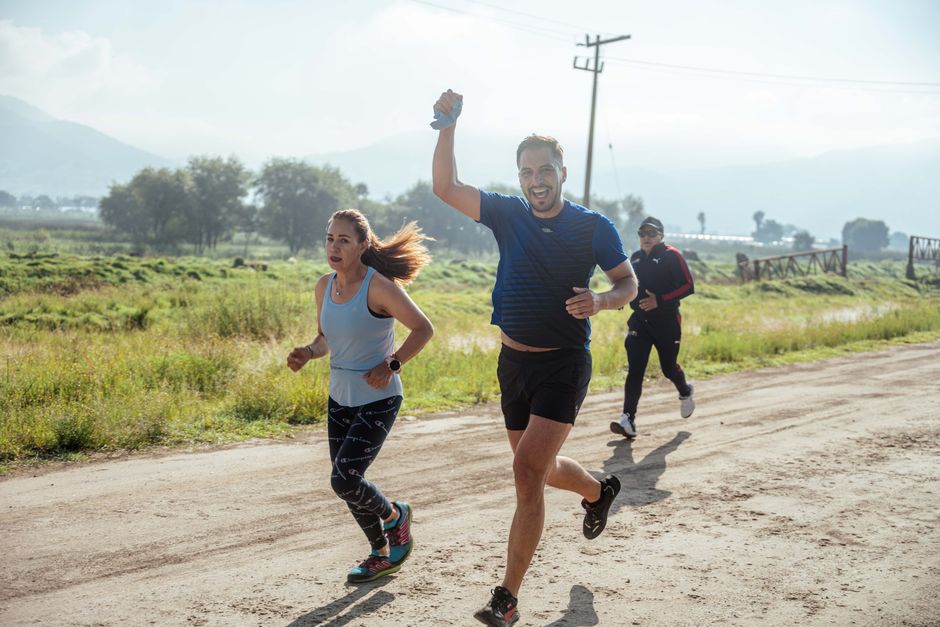
If the Adrenaline GTS feels like a structured trainer and you want something that moves more like a neutral shoe, the GT-2000 12 is the better pick. At $130, it weighs about 8.8 oz in men’s size 9 — 1.4 oz lighter per shoe — and runs on an 8mm heel-to-toe drop versus the Brooks’ 12mm. Those are not small differences in feel.
The midsole is FF BLAST+ foam, ASICS’ more responsive compound. The GT-2000 12 has genuine energy return underfoot. Runners doing tempo sessions or shorter races in their stability shoe will notice this. The Adrenaline GTS 24 absorbs well; the GT-2000 12 also gives back.
Support comes from the LYTE TRUSS system — a lightweight structural element through the midfoot that adds rigidity without the visible hardware of older ASICS designs. It handles mild-to-moderate overpronation reliably. Where it falls short is at the severe end: the support is lighter by design, and a heavy overpronator logging long miles may find the LYTE TRUSS insufficient by the back half of a run.
The lower drop is worth planning around. Runners accustomed to high-drop shoes or years in the Adrenaline GTS will feel the 4mm difference in the calf and Achilles. Allow two to three weeks of gradual transition if you are switching categories.
Four Runner Profiles, Four Clear Answers
- Marathon training, 40-plus miles weekly, moderate-to-severe overpronation. Brooks Adrenaline GTS 24. The GuideRails earn their value over long miles when form breaks down, and the DNA LOFT v3 cushioning holds up through high-volume weeks better than lighter foams.
- Recreational runner, 20 to 30 miles weekly, mild-to-moderate overpronation, wants a shoe that does not feel clinical. ASICS GT-2000 12. Lighter, more responsive, and the LYTE TRUSS provides enough structure without the rigid, corrective feel that puts many runners off traditional stability footwear.
- History of runner’s knee or patellofemoral pain alongside overpronation. Brooks Adrenaline GTS 24. The dual-sided GuideRails specifically reduce excess lateral knee movement — the mechanism most commonly linked to patellofemoral pain syndrome in overpronators. Sports podiatrists frequently name it by model for this presentation.
- Wide or extra-wide foot with overpronation. Brooks Adrenaline GTS 24 in 2E or 4E. The GT-2000 12 does not offer that sizing, full stop.
One situation where neither shoe is right: supination with a rigid high arch. Both add medial support that works against that foot type. The Brooks Ghost 16 or ASICS Gel-Nimbus 26 are the correct categories for underpronators.
The Fit Errors That Ruin an Otherwise Correct Shoe
Are you sizing up for foot swell?
Feet expand during a run — up to half a size over a long effort. Buying for your standing shoe size means a tight toe box by mile 8. The right fit: a thumb’s width between your longest toe and the end of the shoe while standing. Both the GTS 24 and GT-2000 12 run true to size for most runners, but Brooks tends to run slightly narrower through the midfoot in standard width before the wide sizes — if you are borderline, size up or go directly to 2E.
Do custom orthotics change the equation?
Yes, significantly. Orthotics already provide arch correction. Pairing a custom insert with a GuideRails or LYTE TRUSS shoe creates overlapping correction that can over-control inward motion and actually alter gait mechanics negatively. If you use custom orthotics, talk to whoever prescribed them before buying a stability model. A neutral shoe — the Brooks Ghost 16 ($130) or ASICS Gel-Kayano 30 in low-volume — typically pairs better with custom insoles than either shoe reviewed here.
Specs Side by Side: The Numbers That Settle the Decision
| Spec | Brooks Adrenaline GTS 24 | ASICS GT-2000 12 |
|---|---|---|
| Price | $140 | $130 |
| Weight (men’s size 9) | 10.2 oz | 8.8 oz |
| Heel-to-toe drop | 12mm | 8mm |
| Support system | GuideRails (dual-sided heel) | LYTE TRUSS (midfoot) |
| Midsole foam | DNA LOFT v3 | FF BLAST+ |
| Width options | 2A / B / D / 2E / 4E | B / D / 2E |
| Best pronation severity | Mild to severe | Mild to moderate |
| Estimated lifespan | 400–500 miles | 350–450 miles |
| Best for | High mileage, wide feet, knee history, severe pronation | Moderate mileage, speed days, natural-feel preference |
Medical Disclaimer: This content is for informational purposes only and does not constitute medical advice. Always consult a qualified healthcare professional before making health-related decisions.