The best place to start strength training after 40 is home, with controlled bodyweight exercises and a schedule you can repeat. You do not need a gym membership, heavy equipment, or punishing workouts. You need two or three sessions each week, enough resistance to challenge your muscles, and a way to add difficulty over time. This approach remains useful in 2026 because it solves the main problem strength training must solve: giving your muscles a clear reason to adapt while protecting your joints and recovery time.
Why Bodyweight Strength Training Works After 40
Muscle strength declines when daily life stops asking for it. That decline can affect stairs, lifting groceries, getting up from a chair, balance, and confidence. Bodyweight training reverses the problem by making ordinary movements harder in a controlled setting.
Muscles respond to challenge, not equipment
Your muscles do not know whether resistance comes from a barbell, a machine, or your body position. They respond to tension, effort, and repeated practice. A slow squat, a paused push-up, or a split squat can create enough challenge for a beginner and for many adults returning to exercise. Finish most sets with one or two clean repetitions still available. That effort level gives you a training effect without turning every session into a recovery problem.
Strength supports daily movement
A good home routine trains the patterns you use outside exercise: squatting, pushing, pulling, hinging, carrying, and bracing. Bodyweight training covers most of these patterns, although pulling usually needs a safe bar, sturdy table, or resistance band. The practical goal is simple: make standing, climbing, reaching, and lifting feel easier six to twelve weeks from now.
How Often Should Adults Over 40 Train at Home?
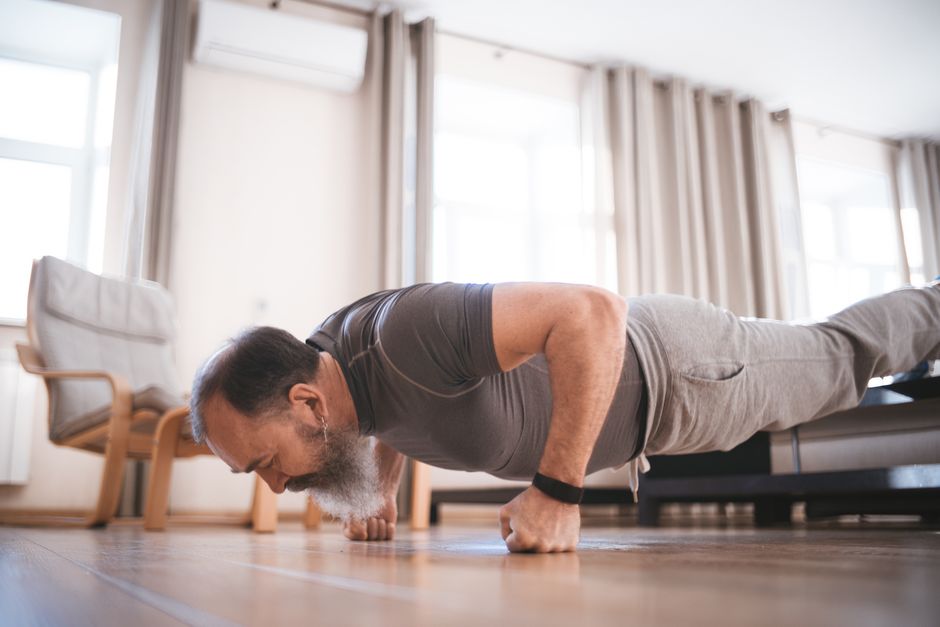
Three short sessions per week is the strongest starting point for most healthy beginners. Leave at least one day between hard sessions so your muscles and connective tissue can recover.
Why three sessions beat daily hard workouts
Training every day can sound efficient, but beginners often repeat the same sore joints before they recover. Three sessions give you enough weekly practice without making exercise compete with sleep, work, or family duties. On non-training days, walk, move through a comfortable range of motion, or perform one easy set of sit-to-stands. Keep those activities easy enough that they do not reduce your next strength session.
How long each session should last
Allow 30 to 45 minutes. Spend five minutes warming up, 20 to 30 minutes on strength work, and a few minutes slowing your breathing. Longer sessions are not automatically better. If your form worsens after 35 minutes, stop there and return fresh at the next session.
What Should a Beginner Bodyweight Workout Include?
A complete beginner workout needs five movement categories: a squat, a push, a hinge, a pull, and a trunk exercise. Start with versions that let you control every repetition. Progress only after the current version feels stable.
Which exercises should come first?
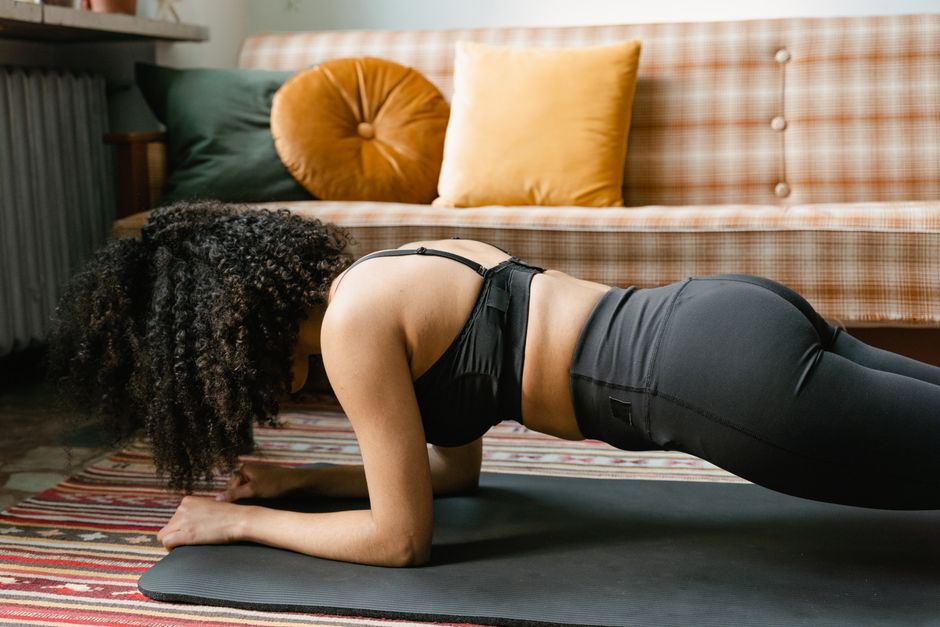
Use a chair squat for the squat pattern, a wall or countertop push-up for pushing, a hip hinge with your hands on your thighs for the hinge, and a standing band row or carefully tested table row for pulling. Add a dead bug or elevated plank for trunk control. Perform one warm-up set of each movement, then two work sets. Aim for six to twelve repetitions, except planks, which can use 15 to 30 second holds.
How should you choose the starting version?
Choose the hardest version that allows a quiet, controlled body and no sharp pain. For push-ups, a wall is easier than a countertop, which is easier than a low bench. For squats, use a high chair before lowering the seat height. For planks, raise your hands on a counter before moving to the floor. The correct version may feel modest on the first day. That is a strength, because it leaves room to progress without forcing poor technique.
How to Progress Without Weights
Progression is the part that turns movement into strength training. Repeating the same easy routine forever improves comfort but eventually stops creating a strong reason for your muscles to adapt. Use one change at a time.
- Slow the lowering phase to three seconds. Count steadily rather than dropping quickly into the bottom position.
- Add a pause at the hardest point, such as the bottom of a squat or the top of a glute bridge.
- Move to a harder body position, such as countertop push-ups after wall push-ups.
- Add a third set only when two sets no longer challenge you and your recovery remains good.
Use a simple progress rule
Record the exercise, variation, repetitions, and effort after each session. When you complete every repetition with stable form and still feel you could perform two more, change one variable at the next workout. Do not increase repetitions, slow the tempo, add a set, and change the exercise all at once.
How to Protect Knees, Shoulders, and the Lower Back
Most training problems after 40 come from a poor match between exercise difficulty and current capacity. The answer is not to avoid strength work. The answer is to reduce the range, speed, or leverage until you can control the movement.
Knee-friendly training choices
For sensitive knees, begin with a high chair squat and keep your shins close to vertical. Move slowly and stop before pain becomes sharp, unstable, or worse with each repetition. A supported split squat can build leg strength later, but use a wall or chair for balance. Mild muscle effort around the thighs is expected. Joint pain that changes your walking pattern is a signal to stop that exercise and get medical advice before continuing.
Shoulder and back control
Keep elbows about 30 to 45 degrees from your body during push-ups instead of flaring them wide. During hinges, push your hips backward while keeping your ribs stacked over your pelvis. The lower back should not do all the work. If a movement causes numbness, tingling, chest pain, dizziness, or sudden weakness, stop immediately and seek appropriate medical care. People with recent surgery, uncontrolled blood pressure, serious heart disease, or a known joint injury should receive individual guidance before starting.
Common Home Training Mistakes That Stall Progress
Bodyweight training looks simple, so people often rush the details. These mistakes make the work less effective and raise the chance of irritation.
The mistakes that matter most
- Training to failure every time: Pushing until your form collapses creates more fatigue than useful practice. Stop when the next repetition would look different.
- Skipping pulling movements: Push-ups alone do not balance the upper body. Add rows with a properly secured setup or use a band.
- Changing routines too often: Keep the same core movements for at least four weeks so you can measure progress.
- Using speed to hide weakness: Bouncing from the bottom of a squat or dropping through a push-up reduces control. Slow the movement.
- Ignoring recovery: Poor sleep, constant soreness, and falling performance mean the plan needs less volume, not more motivation.
When home training needs a change
If you have trained consistently for eight to twelve weeks and can perform advanced variations for 15 or more clean repetitions, bodyweight alone may no longer provide enough resistance for some muscles. At that point, a supervised gym program, adjustable dumbbells, or resistance bands can add load. Do not buy equipment simply because progress feels slow during the first few weeks. First check sleep, exercise form, session spacing, and whether you are actually recording gradual progress.
What Results Should You Expect After 40?
Expect better control and easier daily movement before dramatic visual changes. In the first two to four weeks, many people notice improved balance, smoother sit-to-stands, and less hesitation during exercise. Strength gains often come from better coordination as well as muscle adaptation.
Train three times each week. Build from two sets to three when recovery stays steady. Work toward 12 controlled chair squats, 10 countertop push-ups, 12 glute bridges, 20-second elevated planks, and 10 supported split squats per side. These are useful markers, not mandatory tests. A person starting with joint pain or a long break may need more time.
The clearest verdict
For adults over 40 starting at home, a three-day full-body routine is the best choice because it combines enough practice with manageable recovery. Focus on controlled squats, push-ups, hinges, rows, bridges, and trunk exercises. Add difficulty slowly. If you can train consistently for eight weeks without chasing soreness, you have built the foundation that matters most: strength that transfers to ordinary life.
Always consult a qualified healthcare professional before making health-related decisions.