
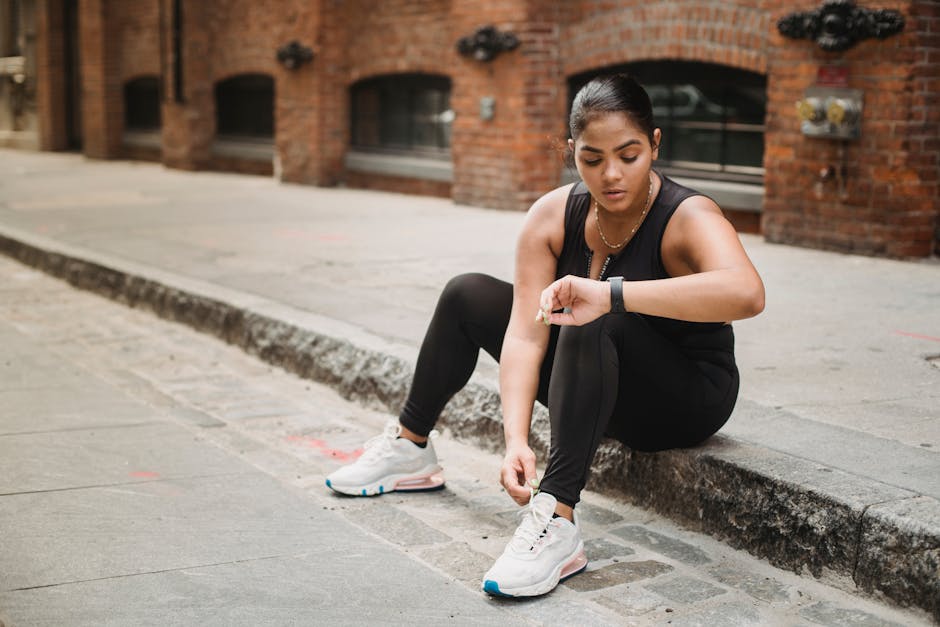
The fitness tracker market splits sharply at the $50 mark. Above that line sit Fitbit, Garmin, and Samsung. Below it, you find brands like Fitpolo — and the question worth asking is whether that lower price point actually costs you anything that matters.
What Fitpolo Is and Why Budget Trackers Fill a Real Gap
Fitpolo is a consumer electronics brand producing budget-tier fitness trackers and smartwatches, typically retailing between $20 and $45 on Amazon and other major retail platforms. Their most commonly reviewed models include the Fitpolo H706, a slim activity band with a small color touchscreen, and the Fitpolo Smart Watch H806, which adds a larger 1.3-inch display and SpO2 blood oxygen monitoring. Both sit firmly in the entry-level wearable segment.
The brand targets a specific buyer: someone who wants basic health tracking without the commitment of a $100-plus device. That is a legitimate market. Not everyone needs turn-by-turn GPS navigation on their wrist. Some people simply want to know whether they hit 8,000 steps, how long they actually slept, and whether their resting heart rate is trending in the right direction.
Across most of the Fitpolo lineup, the standard feature set includes:
- Step counting and estimated distance
- Continuous or on-demand optical heart rate monitoring
- Sleep tracking with light, deep, and REM stage estimation
- Between 10 and 14 sport modes depending on the model
- Smartphone notification mirroring for calls, texts, and app alerts
- IP67 or IP68 water resistance
- 7 to 10 days of battery life with typical use
- Connected GPS, which draws on your phone’s GPS signal during outdoor workouts
The H706 runs approximately $25 to $30. The interface is stripped back, which most users find easier to navigate than more feature-dense trackers. The H806 steps up to a larger display and supports SpO2 readings that the base H706 lacks.
One clarification worth making: the absence of built-in GPS is the most significant hardware omission at this price point, but it is not unique to Fitpolo. The Xiaomi Mi Band 8 at $35 also relies on connected GPS. The Fitbit Inspire 3 at $99 does too. You typically need to spend above $150, into Garmin Forerunner or Polar Pacer territory, before onboard GPS becomes standard. That context matters when evaluating what Fitpolo actually is and is not.
The honest framing is this: Fitpolo does not compete with Garmin or Apple Watch. It competes with the question of whether a person should start tracking their health at all. At $25, the barrier is low enough that finding out becomes nearly cost-neutral.
Fitpolo vs. Competitors: A Direct Spec Comparison
Numbers clarify what marketing copy tends to obscure. The table below covers the Fitpolo H706 against three devices at different price points that buyers at this stage of research typically consider side by side.
| Feature | Fitpolo H706 (~$28) | Xiaomi Mi Band 8 (~$35) | Fitbit Inspire 3 (~$99) | Garmin Vivosmart 5 (~$149) |
|---|---|---|---|---|
| Built-in GPS | No (connected) | No (connected) | No (connected) | No (connected) |
| Heart Rate Monitor | Continuous optical | Continuous optical | Continuous + SpO2 | Continuous + SpO2 + stress |
| Sleep Tracking | Basic stages | Advanced stages | Sleep Score + insights | Advanced + Body Battery |
| Battery Life | 7–10 days | 14–16 days | 10 days | 7 days |
| Water Resistance | IP68 | 5 ATM | 50m | 50m |
| Sport Modes | 14 | 150+ | 20+ | 15+ |
| Companion App | FitCloudPro | Zepp / Mi Fitness | Fitbit app | Garmin Connect |
| Subscription Required | No | No | Optional ($9.99/mo) | No |
The Xiaomi Mi Band 8 presents the strongest case against buying the Fitpolo H706. At only $7 more, it offers double the battery life, significantly more sport mode variety, and a more mature app ecosystem. The hardware gap is real. Where Fitpolo holds a practical edge is simplicity — FitCloudPro is straightforward enough that users who find Zepp’s interface cluttered often prefer it, particularly older adults who want fewer screens to navigate.
The Fitbit Inspire 3 at $99 is a different conversation entirely. It offers stronger sleep analysis algorithms, deeper integration with iOS and Android health platforms, and reliable long-term firmware support. Fitbit Premium at $9.99 per month unlocks health trend analysis that no $28 tracker can replicate. Whether that costs more than the hardware gap is worth depends entirely on how seriously you intend to use the data over time.
Accuracy: Where Budget Trackers Typically Fall Short
Is the step counter reliable for daily use?
Step counting on the Fitpolo H706 is generally within an acceptable range for casual tracking. Most informal comparisons suggest accuracy of roughly 90 to 95 percent against manual counts during steady walking on flat terrain. The readings are consistent enough to show meaningful day-to-day trends, which is the actual purpose for most people who buy a tracker at this price.
Overcounting occurs during activities involving repetitive wrist motion unrelated to walking — chopping food, pushing a shopping cart, certain driving conditions. This is a known limitation across virtually all wrist-based trackers regardless of price, including Fitbit and Apple Watch. The Fitpolo does not handle this meaningfully worse than trackers costing several times as much.
How accurate is the heart rate monitor during exercise?
This is where the honest answer gets more complicated, and where the price difference genuinely reflects a hardware reality.
Resting heart rate readings are generally within 2 to 5 bpm of chest strap measurements — acceptable for baseline monitoring and long-term trend tracking. During moderate-intensity steady-state exercise like brisk walking or light cycling, the readings remain directionally useful. During high-intensity intervals or HIIT sessions, the optical sensor struggles to keep pace with rapid heart rate changes. The lag can be significant enough that HR zone training based on these readings would typically be unreliable for structured workout programs.
For comparison, the Garmin Vivosmart 5 at $149 uses Garmin’s Elevate v4 optical sensor, which performs measurably better during dynamic movement. The hardware difference between a $28 sensor and a $149 sensor is real, and cardio athletes will feel it in their data. That performance gap is the clearest argument for spending more if heart rate zone accuracy matters to your training approach.
Does the sleep tracking provide useful data?
Sleep duration data — how long you were actually asleep versus lying in bed — is generally reliable and actionable for building awareness of patterns over time. The staging breakdown into light, deep, and REM sleep follows the same accelerometer-plus-heart-rate inference method used by most consumer trackers at all price points. The algorithm is less refined than Fitbit’s or Garmin’s, meaning staging percentages should be read as rough approximations rather than precise measurements. For clinical or medical use, no consumer wearable at this price is appropriate. For general pattern awareness over weeks and months, the Fitpolo’s sleep data is reasonably useful.
Three Things to Evaluate Before Buying Any Fitness Tracker
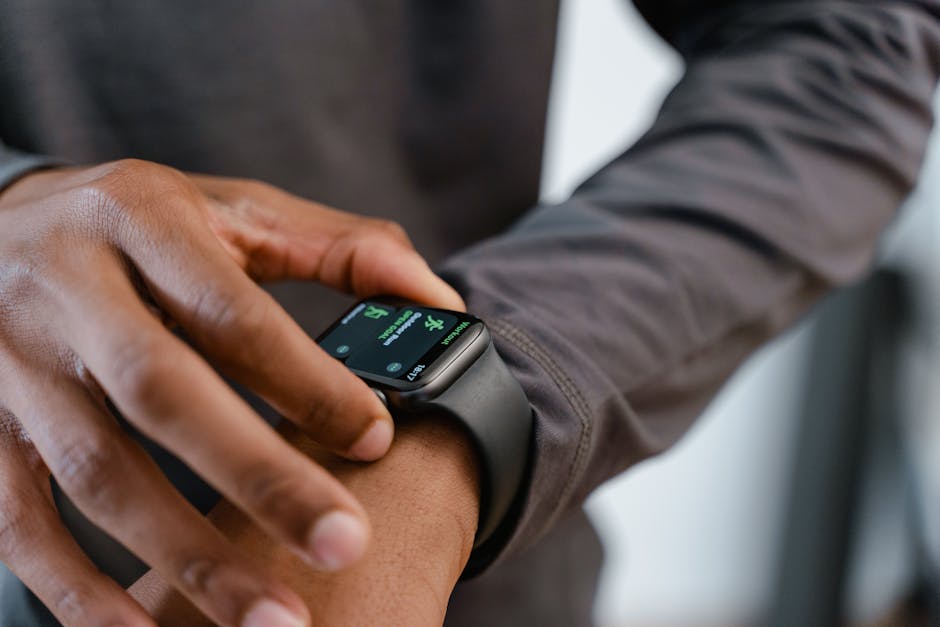
These considerations apply before you choose any device, regardless of brand or price.
- Define what useful data actually means for your situation. There is a meaningful difference between wanting to move more as a general goal and training for a specific athletic target. If your aim is awareness — am I sleeping enough, am I moving throughout the day — almost any tracker works adequately. If you are targeting specific heart rate zones or need GPS-mapped route data for coaching feedback, the hardware requirements change substantially. The most common buyer mistake in this category is choosing the wrong type of tracker for the actual goal, not the wrong brand.
- Download the companion app before you commit to the hardware. A fitness tracker is only as useful as the software that interprets its data. App quality varies widely, and the same hardware can feel premium or frustrating depending entirely on the software experience. Check the app’s recent reviews for your specific phone OS version. Common complaints across budget tracker apps include Bluetooth sync instability, data loss following app updates, and limited historical trend visualization. If sync reliability matters to your use case, test the app before you are past your return window.
- Think in total cost over 24 months, not purchase price alone. Budget trackers typically have shorter operational lifespans — not necessarily due to poor engineering, but because they use less durable display glass, lighter-duty water seals, and smaller batteries that degrade faster under continuous use. A $28 tracker replaced after 18 months costs approximately the same over three years as one $56 device with a longer lifespan. Factor that replacement probability into the value equation before assuming budget automatically wins on cost efficiency.
Who Should Buy the Fitpolo and Who Should Walk Away
The Fitpolo H706 is the right tracker for first-time wearable users who are genuinely uncertain whether they will use a device consistently. At $25 to $30, the financial exposure of discovering that you do not check your tracker after the first two weeks is manageable. It covers the fundamentals — steps, sleep, resting heart rate — without asking you to commit to a $100-plus device before you understand how you will actually engage with the data.
It is also a reasonable option for older adults who want simplified daily health monitoring without a complicated interface, or for parents buying a first tracker for a younger teenager who may not maintain the habit long-term.
Walk away from the Fitpolo if any of these apply to you:
- You run, cycle, or do structured cardio regularly and need reliable heart rate zone data during workouts
- You want onboard GPS without carrying your phone
- You are looking for advanced health metrics — VO2 max estimates, HRV readings, stress scores — with any meaningful analytical depth
- You are already invested in a health ecosystem that does not integrate with the Fitpolo app platform
- You expect to use a single tracker for more than 24 months without replacement
For any of those use cases, the Samsung Galaxy Fit3 at approximately $49 or the Fitbit Inspire 3 at $99 are meaningfully better investments. The gap in data quality, sensor accuracy, and software reliability between a $28 device and a $99 device is real and compounds over months of daily use.
Battery Life and the App: The Short Verdict

The claimed 7 to 10 day battery holds up in practice with continuous heart rate monitoring enabled. That is a genuine strength. The companion app is functional but reveals its limitations in data visualization and long-term trend analysis — which is exactly where users who take health tracking seriously will feel most constrained.
As wearable sensor costs continue to fall and the algorithms interpreting raw biometric data mature across the industry, the performance gap between budget and premium trackers will likely narrow within the next few product generations. The data that currently requires a $150 device to collect usefully may be standard on $30 devices before long. For now, the Fitpolo sits in a specific and honest niche: a low-risk entry point for building health awareness, not a replacement for tools built around serious athletic or medical monitoring needs.
Medical Disclaimer: This content is for informational purposes only and does not constitute medical advice. Always consult a qualified healthcare professional before making health-related decisions.