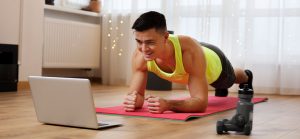

The best indoor workout for a cold, wet February day is a 30-minute full-body circuit you can start without special equipment. It should raise your heart rate, train your legs and upper body, and finish before motivation disappears.
You do not need a gym, a perfect playlist, or a two-hour block. You need a warm room, a clear patch of floor, and a plan that tells you exactly what to do next.
The best no-gym workout is a 30-minute full-body circuit
Use five minutes to warm up
Start with five minutes of easy movement. March in place for 60 seconds, swing your arms for 30 seconds, perform eight slow bodyweight squats, complete eight hip hinges, and finish with 30 seconds of gentle jumping jacks or step-outs. The goal is not to get tired. The goal is to raise your temperature and make the first hard movement feel normal.
Cold muscles do not need dramatic stretching. They need gradual motion. Keep the warm-up controlled, especially if you have been sitting at a desk or driving.
Follow this exact 30-minute schedule
| Minutes | Block | Work | Easy option |
|---|---|---|---|
| 0–5 | Warm-up | March, arm swings, squats, hip hinges | Slow marching only |
| 5–13 | Strength circuit | 40 seconds squats, 20 seconds rest; repeat with incline push-ups, reverse lunges, and dead bugs | Chair squats, wall push-ups, alternating taps |
| 13–21 | Cardio circuit | 40 seconds step-ups, fast marching, skaters, and shadow boxing; 20 seconds rest between moves | Keep one foot on the floor and reduce speed |
| 21–27 | Strength finish | Three rounds of 10 glute bridges, 8 push-ups, and a 20-second plank | Wall push-ups and a raised plank |
| 27–30 | Cool-down | Easy walking, calf stretches, chest opening, slow breathing | Stay standing if floor work feels stiff |
Work at a pace where you can speak in short sentences. If you cannot control the final repetitions, slow down. The winner is the routine you can repeat three times each week, not the session that leaves you unable to move the next morning.
How to warm up safely when the room is cold

Raise body temperature before stretching hard
A cold room changes how the first few minutes feel, but it does not mean you need an aggressive warm-up. Add a layer of clothing, clear the floor, and begin with low-impact movement. Marching, heel digs, step-outs, and slow squats create heat without demanding fast force from stiff joints.
Spend four to eight minutes moving through the same patterns you plan to train. For squats, use shallow squats first. For lunges, take short steps and hold a wall. For push-ups, start against a wall or countertop. Your first set should feel like a rehearsal.
Match the exercise to the surface
Wet weather often means wet shoes, damp floors, and less traction near the entrance. Move to a dry surface before doing lunges, skaters, or mountain climbers. A carpet can work for bodyweight training, but thick carpet makes balance less stable. Bare feet may help on a clean, dry floor; socks can turn a hard stop into a fall.
Keep knees pointed in the same direction as your toes during squats and lunges. Keep your ribs stacked over your hips instead of arching your back during planks. These simple checks matter more than chasing a deeper range of motion.
Know when discomfort means stop
Muscle effort, warmth, and a rising heart rate are expected. Sharp pain, sudden joint pain, chest pressure, faintness, or unusual shortness of breath are not training targets. Stop and get medical advice for symptoms that are severe, new, or persistent. People with a heart, lung, bone, or joint condition should get personal guidance before starting hard exercise.
The clear recommendation: use a longer, easier warm-up when you feel stiff, not a harder first interval. Cold weather is a reason to ease in. It is not a reason to skip movement altogether.
Choose the workout by energy level, not by mood
Do not wait to feel motivated. Pick the session that matches the energy you actually have. That decision prevents the two common February errors: doing nothing because the planned workout feels too hard, or starting too fast and quitting after ten minutes.
Three useful options for one cold day
What to do when motivation is nearly zero
Use the ten-minute rule: warm up for three minutes, perform one circuit for five minutes, then cool down for two minutes. If you still feel flat, stop. That is a completed movement session, not a failure. If energy improves, add another ten-minute block.
For a low-energy day, the best choice is a brisk indoor walk with five one-minute periods of faster marching. Add five slow squats every few minutes. This will not replace every hard session, but it keeps the habit alive and gives your body useful movement without turning tiredness into a punishment.
The home-workout mistakes that make February routines fail
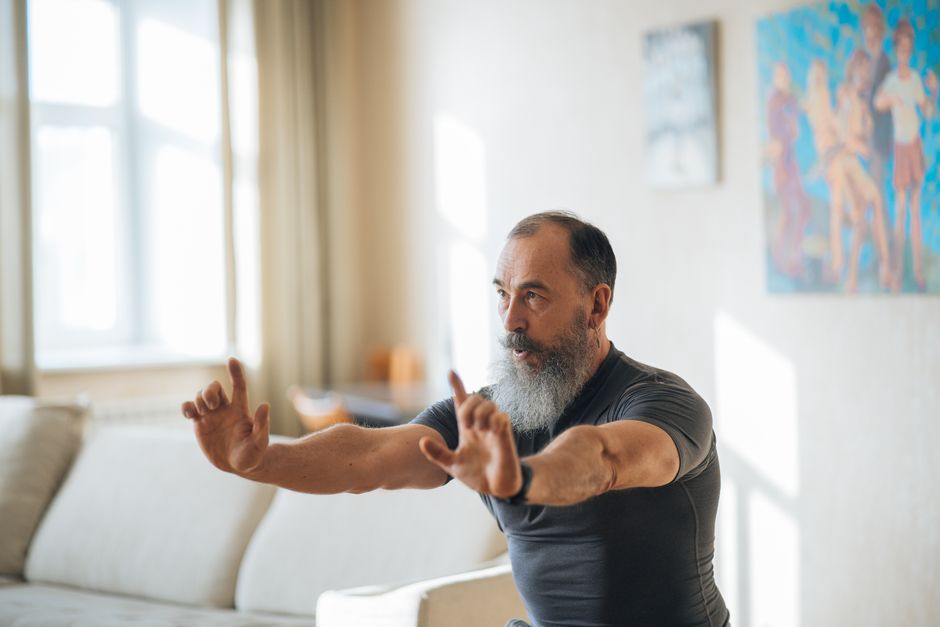
Fix these five problems first
- Starting at full speed: The first interval should not be your fastest interval. Leave room to build.
- Choosing exercises for entertainment: Burpees look hard but are a poor default for a cold, stiff body. Squats, step-ups, push-ups, hinges, and carries train more muscle with easier control.
- Ignoring traction: Test the floor before fast lateral movements. Remove loose rugs and dry wet shoes.
- Training only the mirror muscles: Pair pushing with pulling when possible, and pair squats with hip hinges. Your back, hips, and hamstrings need attention too.
- Using soreness as the score: Severe soreness can ruin the next session. Progress by adding one round, five minutes, or a small amount of resistance, not all three at once.
When to shorten the workout
Cut the session in half if sleep was poor, you are recovering from illness, or your form changes before the timer ends. Keep the warm-up and cool-down, then remove the final circuit. A shorter session protects your next training day.
Do not train through fever, dizziness, chest symptoms, or a clear illness. Rest is not a workout failure. It is the correct choice when your body is dealing with something bigger than ordinary tiredness.
When to stop buying solutions
Do not buy another program, subscription, or piece of equipment to solve a consistency problem. If you cannot complete three bodyweight sessions in a week, more gear will not fix the schedule. Put the workout on the calendar, keep it short, and make the first movement easy enough to begin.
Basic equipment can help, but only after bodyweight training works
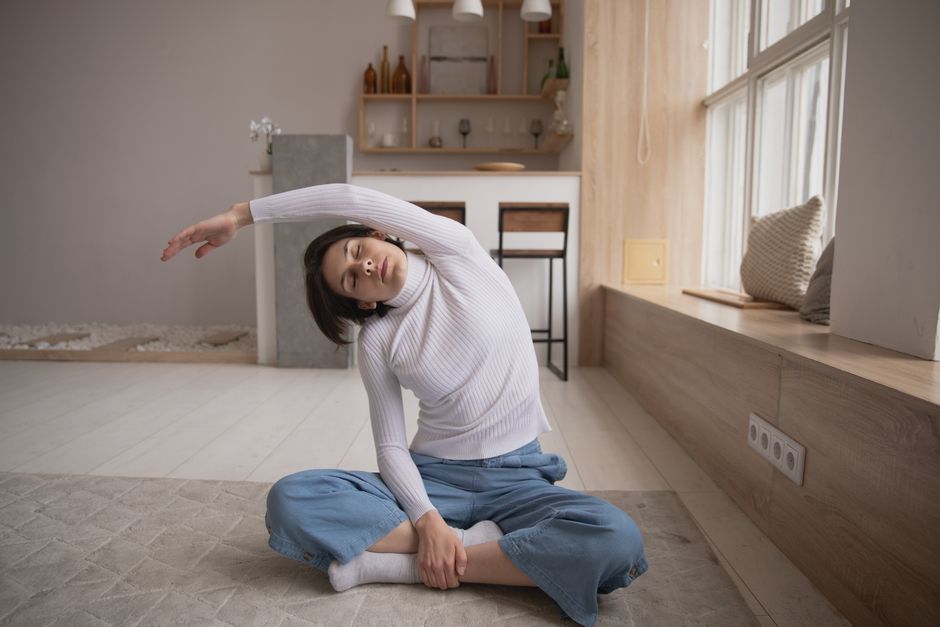
Which simple tools earn a place at home?
My pick for most people is a stable exercise mat, not a large machine. The Manduka PRO mat is 6 millimeters thick and gives floor exercises a more predictable surface, but it is expensive and heavy. A basic 6–8 millimeter fitness mat is enough for squats, push-ups, glute bridges, and mobility work.
They make squats, rows, presses, and deadlifts harder without storing a full rack of weights. The tradeoff is space, cost, and slower weight changes between exercises.
When a suspension trainer or rower makes sense
Buy it only if you have a secure anchor point and enough clearance to move safely. A loose door anchor is not a substitute for a tested setup.
The Concept2 RowErg gives you a serious full-body cardio option, but its standard frame is about 96 inches long. It is the best choice here only for someone with the room and a real commitment to rowing. It is a poor purchase for a small apartment or an uncertain routine.
The final equipment verdict
For most cold February workouts, buy nothing first. Use bodyweight training for two weeks. If your knees need more comfort, get a mat. If strength becomes too easy, add adjustable dumbbells. Equipment should solve a specific limit; it should not become another reason to delay starting.
The clear recommendation is three 25–30 minute indoor sessions each week: one full-body circuit, one low-impact cardio and mobility day, and one strength-focused session. Keep the room warm, start slower than your ego wants, and use equipment only when it makes the next session more useful.
Always consult a qualified healthcare professional before making health-related decisions.