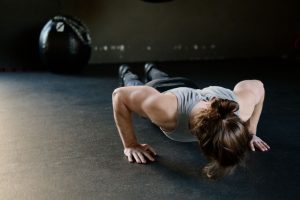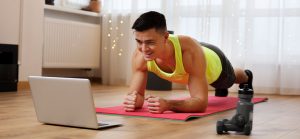
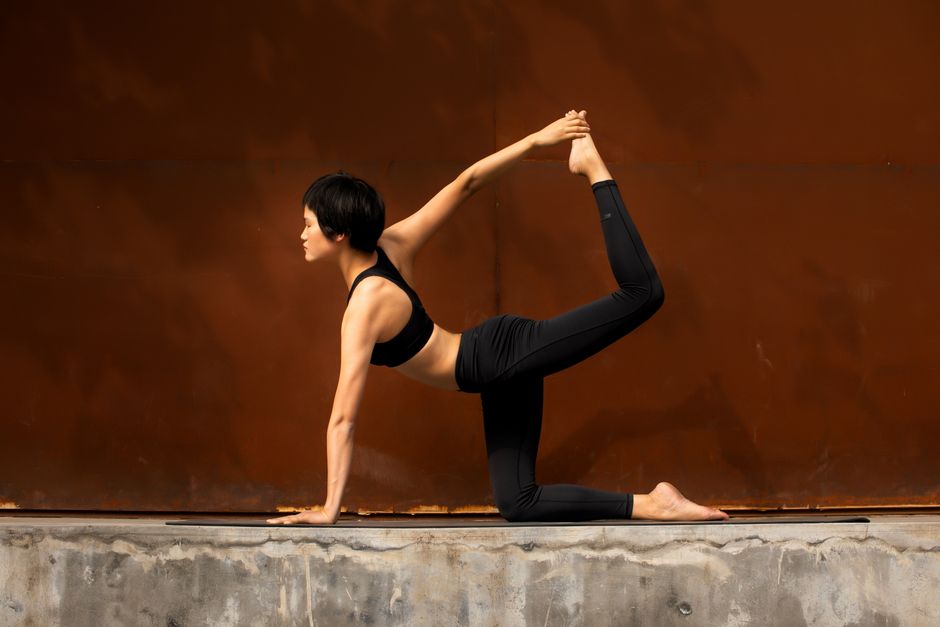
Three days a week in the gym. Foam rolling after every session. A 10-minute static stretch routine you actually stick to. And still — the same tight spots. The deep hip flexors that never fully release. The inner thighs that feel like rope. That knot between your shoulder blades that massage helps for a day and then returns. You have not been lazy about recovery. You have just been working the wrong tissue.
Muscle fibers respond to the stretching you have been doing. The problem is that muscles only account for part of the tension you carry. Wrapped around every muscle, connecting joints, binding the body together, is fascia — a dense web of connective tissue that operates on a completely different timescale. This is why Yin Yoga exists, and why it solves problems that more dynamic recovery cannot touch.
What Yin Yoga Actually Does to Your Connective Tissue
Most flexibility work — yoga flows, PNF stretching, foam rolling — targets muscle fibers. The standard 15-to-30-second hold time recommendation is calibrated for muscle relaxation. Muscle responds quickly to stretch: it contracts, resists, then releases. That is why a 30-second hamstring stretch addresses the superficial layer of tension and not much else.
Roughly 30% of muscle tissue by volume is actually fascia. Tendons, ligaments, joint capsules, the myofascial sheaths wrapping individual muscle bundles — all of this connective tissue barely registers a 30-second stretch. It needs something different: sustained, low-intensity load held over minutes, not seconds.
The Stress-Relaxation Principle
Connective tissue is viscoelastic, meaning it behaves differently under brief versus prolonged stress. Apply force quickly and it resists. Apply the same force slowly over several minutes and it begins to creep — a term from materials science describing the gradual deformation of a substance under sustained load. This creep response is exactly what Yin Yoga is designed to produce. After about 90 seconds in a pose, muscles have largely released. The load then shifts to the surrounding fascia and joint capsule. Holding for 3 to 5 minutes gives the connective tissue enough sustained stimulus to respond.
Fibroblasts — the cells that maintain connective tissue — respond to prolonged mechanical stress by producing more hydrated, pliable collagen over time. The stiffness in chronically tight areas is often dehydrated, cross-linked fascial tissue. Yin does not resolve that in one session, but consistent practice over 6 to 8 weeks produces measurable range-of-motion improvements that purely muscle-focused stretching does not.
The Parasympathetic Shift
Beyond the tissue mechanics, passive holds combined with slow diaphragmatic breathing move the nervous system into parasympathetic mode — the body’s rest and repair state. A 2019 study in the Journal of Evidence-Based Complementary and Alternative Medicine found that participants practicing Yin three times per week for 8 weeks reported a 28% reduction in anxiety scores and meaningful improvements in sleep quality. For anyone carrying stress-driven tension, this nervous system effect is worth the practice on its own.
Yin vs. Restorative vs. Vinyasa: Choosing the Right Practice for Your Problem
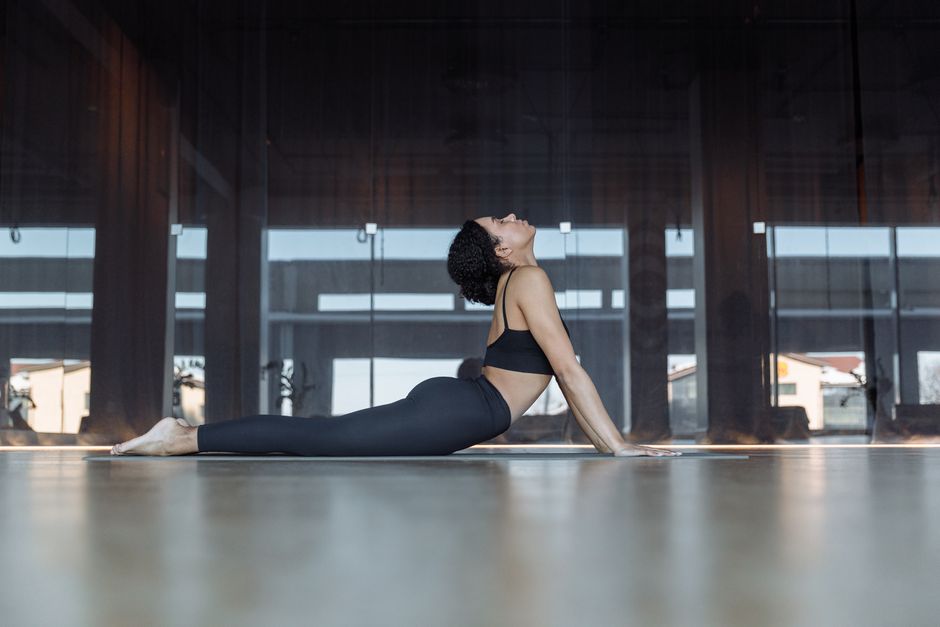
These three yoga styles are frequently grouped together as lower-intensity options, but they target completely different systems. Choosing incorrectly means 45 minutes of minimal benefit for the problem you actually have.
| Feature | Yin Yoga | Restorative Yoga | Vinyasa Yoga |
|---|---|---|---|
| Pose hold time | 3–7 minutes | 5–20 minutes | 1–5 breaths |
| Primary target | Fascia, joint capsules | Nervous system reset | Muscles, cardiovascular |
| Props required | Moderate (blocks, straps) | Heavy (bolsters, blankets) | Minimal |
| Best for | Chronic tightness, recovery | Exhaustion, acute stress | Strength, endurance |
| Best time of day | Evening after training | Rest days or evening | Morning |
If you carry chronic tightness in the hips, lower back, or shoulders that does not respond to regular stretching, Yin is the correct choice. Restorative yoga uses heavy support — stacked bolsters, multiple blankets — and applies essentially no mechanical stress to tissue. It works for nervous system recovery but will not remodel fascia. Vinyasa moves too fast for sustained connective tissue load. Pick based on the actual problem, not the aesthetic.
Five Yin Poses That Target the Most Common Tight Spots
These five poses cover the areas where most people hold chronic tension. Held in this order, they form a complete 35-minute practice.
- Dragon (Low Lunge Variant) — 3–5 minutes per side. Targets the psoas, hip flexors, and quad fascia. Drop the back knee and sink the front hip toward the floor. If the hip does not reach the ground, a Hugger Mugger cork yoga block ($22) under the front thigh lets gravity work rather than forcing the position.
- Butterfly — 4–6 minutes. Soles of feet together, knees falling wide, slight forward fold. This targets the adductor fascia of the inner thigh and the sacroiliac ligaments — an area almost nothing else reaches effectively. A rolled blanket under each knee reduces sharp inner groin sensation when starting out.
- Sleeping Swan — 4–5 minutes per side. Yin’s version of pigeon pose. Front shin at a diagonal, back leg extended. This is the most intense pose in most people’s practice — it loads the piriformis and hip external rotators directly. A Manduka Enlight Rectangular Bolster ($68) under the front hip keeps the pelvis level, which determines whether the piriformis or the lumbar spine compensates for the load.
- Saddle — 3–5 minutes. Kneel and sit back between the heels. Stay upright if the quadriceps are very tight — do not force the recline. This loads the anterior thigh fascia in a way no other pose replicates. Skip it entirely if there is sharp knee pain.
- Caterpillar — 4–6 minutes. Seated forward fold, legs straight, spine allowed to round fully. The target is not hamstring length but the spinal ligaments along the posterior chain. A Manduka UnFold Yoga Strap ($18) looped around the feet maintains the fold without muscular gripping, which defeats the Yin principle entirely.
The Hold Time Question: A Direct Answer
Three minutes is the minimum for connective tissue to begin responding. Less than that and you are working the muscle, not the fascia. More than seven minutes adds load without proportional benefit for most people starting out. Begin every pose at three minutes. Move to five once you can hold the edge comfortably without bracing.
Three Mistakes That Undermine the Practice
Are you going too deep from the start?
Yin is not a flexibility competition. The operative concept is the “appropriate edge”: enough sensation — a dull ache, moderate pressure, a sustained pull — to stress the tissue, but not enough to trigger a protective reflex. Sharp pain in the joint space means you have overshot. Back off 10% depth and stay there. The connective tissue response requires a sustainable edge held consistently, not a maximum one pushed once.
Should you practice through soreness or active inflammation?
No. Hard rule, no exceptions. Yin applies sustained mechanical stress to tissue. If you are recovering from a muscle tear, managing active tendinitis, or in a joint inflammation flare, the practice will worsen the injury. The same sustained load that remodels healthy fascia damages compromised tissue. Restorative yoga — fully supported, zero active mechanical stress — is the correct substitution until inflammation resolves.
Are the props actually optional?
They are not. Props in Yin determine which tissue actually gets loaded, not how hard the pose feels. A block under the hip in Sleeping Swan keeps the pelvis level; without it, the lumbar spine compensates and the piriformis receives none of the intended stress. Bernie Clark, author of The Complete Guide to Yin Yoga and one of the practice’s primary Western developers, makes this point consistently: Yin practiced without props is usually Yin practiced incorrectly. Two cork blocks and a strap — roughly $60 total — change the precision of the practice fundamentally.
Building a Weekly Practice That Produces Measurable Results
How often and when
Two sessions per week is enough to produce measurable connective tissue changes within 6 to 8 weeks. Three sessions is the optimal frequency for athletes using Yin alongside high-intensity training. Place sessions on evenings after your hardest training days. Connective tissue is slightly warmed, the nervous system is ready to downregulate, and the parasympathetic shift Yin produces meaningfully improves sleep quality that night.
A 45-minute weekly sequence
| Pose | Duration | Primary Target |
|---|---|---|
| Butterfly | 5 minutes | Adductors, sacrum |
| Dragon — right side | 4 minutes | Psoas, hip flexors |
| Dragon — left side | 4 minutes | Psoas, hip flexors |
| Sleeping Swan — right | 4 minutes | Piriformis, external rotators |
| Sleeping Swan — left | 4 minutes | Piriformis, external rotators |
| Caterpillar | 5 minutes | Spinal ligaments, posterior chain |
| Reclined Twist — each side | 3 minutes each | Thoracic spine, QL |
| Savasana | 5 minutes | Nervous system integration |
Breathwork and guided options
During long holds, a 4-count nasal inhale followed by a 6-count exhale deepens the parasympathetic response and keeps the mind from fighting the discomfort of held poses. The Insight Timer app (free tier) includes full-length guided Yin sessions with breath cues built into each hold — a useful reference when starting out and learning to calibrate appropriate depth over time.
The person who has been foam-rolling the same hip for months, getting two hours of relief and waking up just as tight, is not missing effort. They are missing the right type of stress — slow, sustained, applied to the tissue that every other recovery method skips. That is the gap Yin closes. The first time something releases in a Dragon pose that nothing else has reached in years, the distinction between muscle work and connective tissue work stops being theoretical and starts being the reason you schedule the practice.
Medical Disclaimer: This content is for informational purposes only and does not constitute medical advice. Always consult a qualified healthcare professional before making health-related decisions.