
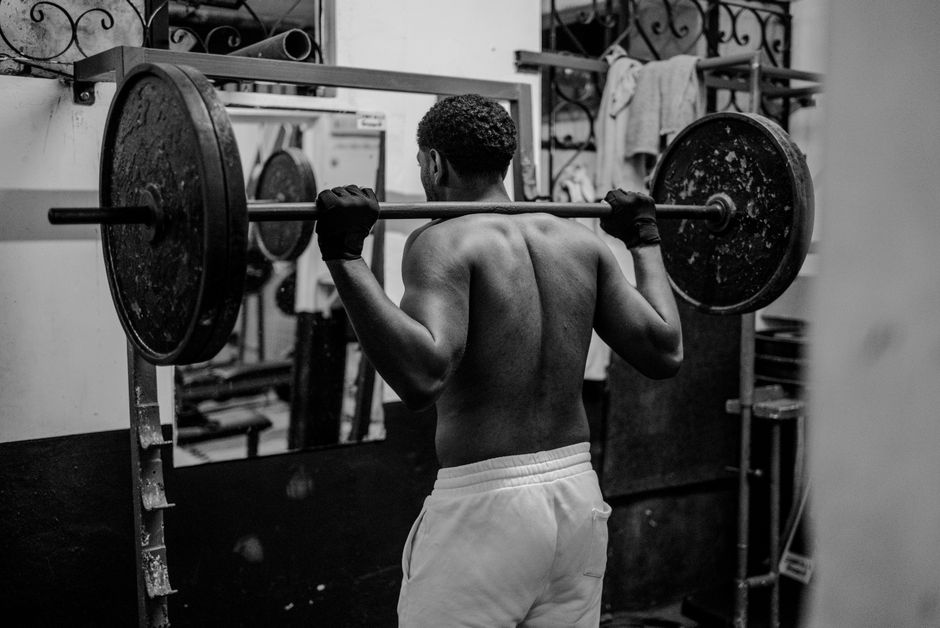
Pick up two dumbbells and you have a complete gym. That is not a motivational line — it is a mechanical fact. Dumbbells allow unilateral loading, free range of motion, and progressive overload across hundreds of movement patterns. Every workout below builds on that foundation, from your first session to your hundredth.
Dumbbells Beat Most Home Gym Equipment. Here Is Why.
A barbell is more efficient for heavy compound lifts. A cable machine delivers better constant tension. But neither fits in a studio apartment, costs under $400, or covers both upper and lower body strength in a single tool.
Dumbbells do all three.
The Bowflex SelectTech 552 ($329) replaces 15 pairs of fixed dumbbells and adjusts in 2.5-pound increments from 5 to 52.5 lbs. The PowerBlock Elite EXP ($299) uses a selector-pin system and handles up to 90 lbs per hand with add-on kits. For fixed options, the CAP Barbell 150lb rubber hex dumbbell set runs about $200 and covers most beginner-to-intermediate needs without any adjustment mechanism to break.
Fixed vs. Adjustable: Which to Buy
Fixed hex dumbbells are faster to grab, harder to break, and fine if you train at one or two consistent weights. Adjustable sets cost more upfront but replace an entire rack. If space is the constraint — and it usually is — adjustable wins. The Bowflex SelectTech adjusts in 2.5-lb increments, which matters more than most people realize. Going from 30 to 35 lbs is a 17% jump. Going from 30 to 32.5 is manageable. Smaller increments mean cleaner progression without stalling at awkward gaps.
The Weight Range You Actually Need
Beginners: 5–30 lbs covers everything for the first 3–6 months. Intermediate: 20–50 lbs. Advanced: 40–80 lbs depending on the movement. You do not need 100-lb dumbbells for home training. You need well-chosen weights and smart programming. A single adjustable pair like the Amazon Basics cast iron hex set starting at $25 per dumbbell handles the beginner range at low cost if a full set is outside budget right now.
Beginner Dumbbell Workout: 3-Day Full-Body Foundation
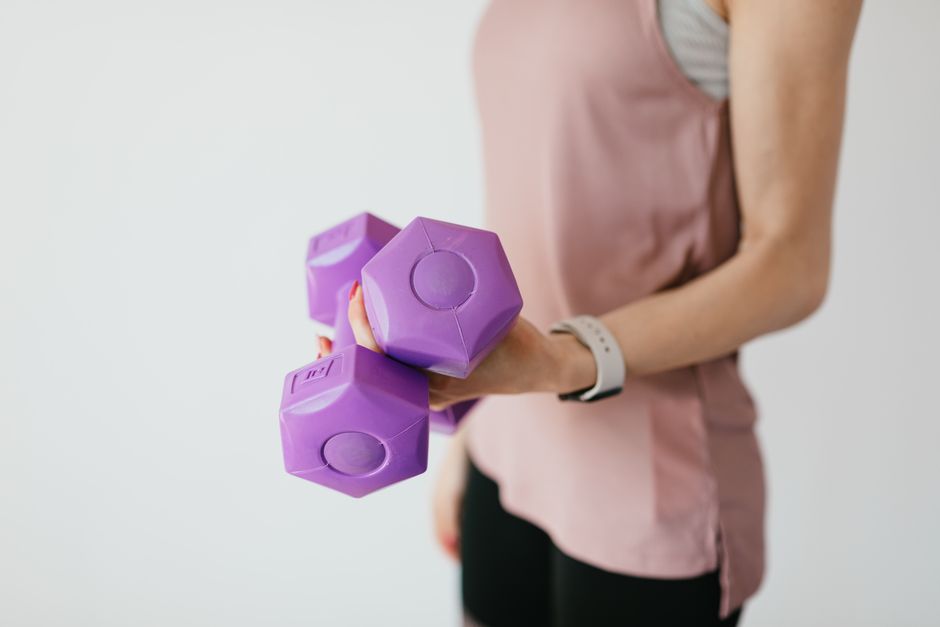
Three days per week. Full-body each session. This is the only structure that makes sense for beginners — you need frequency, not volume, to learn movement patterns and build the neural connections that make strength gains possible. Each session takes 35–45 minutes. Rest 60–90 seconds between sets. Chase progress, not soreness.
| Exercise | Sets | Reps | Starting Weight |
|---|---|---|---|
| Goblet Squat | 3 | 10–12 | 10–20 lbs |
| Dumbbell Romanian Deadlift | 3 | 10 | 15–25 lbs |
| Dumbbell Bench Press | 3 | 8–10 | 10–20 lbs each hand |
| Bent-Over Dumbbell Row | 3 | 10 | 15–25 lbs each |
| Dumbbell Overhead Press | 3 | 8–10 | 10–15 lbs each |
| Dumbbell Curl | 2 | 12 | 8–12 lbs each |
The Progression Rule for Week 2 and Beyond
Add 2.5 lbs when you complete every rep with clean form. Not almost every rep. Every rep. If you grind the last two reps, stay at that weight for another session. Most beginners progress every 1–2 weeks at first. That pace is fast. Do not rush it by skipping reps or adding weight before you have earned the right to.
Day 3 as Active Recovery
The third training day does not need to be a complete rest day. A 20-minute walk, light yoga, or mobility work accelerates recovery without adding meaningful training stress. The program runs Monday/Wednesday/Friday or Tuesday/Thursday/Saturday — the specific days matter less than maintaining a full rest day between each session.
When to Move On From Beginner Programming
Eight weeks minimum. Most people want to jump to a harder program after two weeks because they feel ready. Stay put. The structural adaptation that builds a real foundation — tendons, connective tissue, motor patterns — takes longer than muscle soreness does to disappear. After 8 weeks, if you are completing all sets at the upper end of the starting weights with clean form, move to the intermediate program.
Intermediate Dumbbell Program: 4-Day Upper/Lower Split
Once you can handle 25–35 lb dumbbells for most movements, full-body 3-day training leaves progress on the table. The upper/lower split gives each muscle group more targeted volume while still allowing 48 hours of recovery between sessions hitting the same muscles. Total session time: 45–55 minutes.
Upper Body Days — Monday and Thursday
- Dumbbell Incline Press — 4 sets × 8 reps at 25–40 lbs each hand
- Single-Arm Dumbbell Row — 4 sets × 10 reps at 35–50 lbs
- Arnold Press — 3 sets × 10 reps at 20–30 lbs each
- Neutral-Grip Dumbbell Curl — 3 sets × 12 reps at 15–20 lbs each
- Overhead Tricep Extension — 3 sets × 12 reps at 20–30 lbs (single dumbbell held with both hands)
Lower Body Days — Tuesday and Friday
- Dumbbell Bulgarian Split Squat — 4 sets × 8 each leg at 20–35 lbs each hand
- Dumbbell Romanian Deadlift — 4 sets × 10 reps at 40–60 lbs each hand
- Dumbbell Lateral Lunge — 3 sets × 10 each leg at 20–30 lbs
- Dumbbell Hip Thrust — 3 sets × 12 reps at 30–50 lbs across hips
- Standing Calf Raise — 3 sets × 15 reps holding 25–35 lbs at sides
Rest 90 seconds between sets for compound movements. 60 seconds for isolation exercises. Increase weight by 5 lbs when you hit the top rep count across all sets with clean form.
The Right Dumbbell Weight at Each Training Level
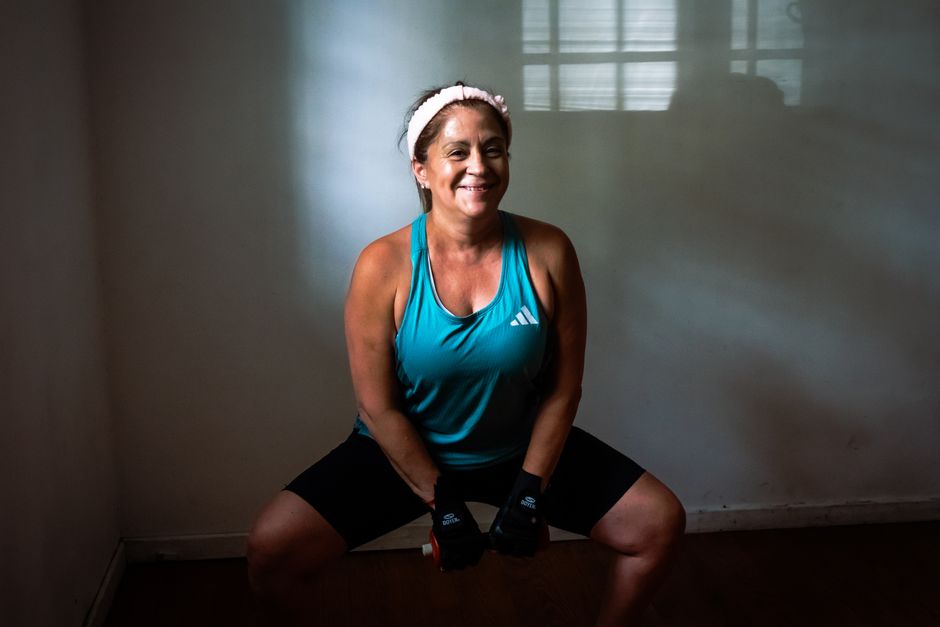
Most people either go too light — endless high-rep sets that build endurance, not strength — or too heavy, compensating with form breakdown. This table shows working weight ranges for the main movements, meaning the weight you use in actual work sets, not warm-ups.
| Movement | Beginner (0–6 months) | Intermediate (6–18 months) | Advanced (18+ months) |
|---|---|---|---|
| Goblet Squat | 15–25 lbs | 35–50 lbs | 60–80 lbs |
| Dumbbell Bench Press | 15–25 lbs each | 30–45 lbs each | 50–70 lbs each |
| Bent-Over Row | 20–30 lbs each | 35–55 lbs each | 60–80 lbs each |
| Romanian Deadlift | 20–35 lbs each | 40–60 lbs each | 70–90 lbs each |
| Overhead Press | 10–20 lbs each | 25–40 lbs each | 45–65 lbs each |
| Bulgarian Split Squat | 10–20 lbs each | 25–40 lbs each | 50–70 lbs each |
If you are regularly hitting the top of the beginner range with clean form, you have outgrown beginner programming. The numbers do not lie. Use them as your benchmark, not how sore you feel after a session.
Advanced Dumbbell Training: Mechanical Drop Sets and Unilateral Work
Advanced training with dumbbells is not about finding heavier dumbbells. It is about increasing the demand on muscles through smarter loading strategies. Two techniques produce outsized results at this stage: mechanical drop sets and unilateral progressive overload.
Mechanical Drop Sets Explained
A mechanical drop set changes the exercise — not the weight — to extend a set past technical failure. Example: start with a dumbbell incline press to failure. Without resting, switch immediately to a flat press. When that fails, move to a floor press. Same weight throughout. You have just hit three mechanical positions that progressively shift leverage in your favor, allowing more total reps than a straight set produces.
This creates significant metabolic stress and mechanical tension — two of the three primary mechanisms driving hypertrophy. Use it for one exercise per session maximum. It works because it is taxing. Applying it to every movement cancels the benefit and wrecks recovery.
Unilateral Training and Why It Matters More Than You Think
Training one limb at a time — single-arm presses, Bulgarian split squats, single-leg Romanian deadlifts — exposes strength imbalances that bilateral movements hide. Most people carry a 10–15% difference between dominant and non-dominant sides. Unilateral work closes that gap, which reduces injury risk and directly improves output when you return to bilateral lifts.
For advanced trainees, a program weighted toward 60% unilateral movements often produces faster strength gains than the reverse. The increased stabilization demand and higher neural recruitment per set make each session more productive than simply adding another bilateral exercise to the stack.
Equipment for the Advanced Range
The Bowflex SelectTech 1090 ($399) adjusts from 10 to 90 lbs and covers the full advanced weight range in a single pair. The PowerBlock Sport 50 ($199, up to 50 lbs per hand) handles most advanced movements at lower cost. Fixed dumbbells above 70 lbs become expensive and space-consuming fast — adjustable options make more financial sense at this level.
Four Form Mistakes That Cost Real Results
These are not minor technique tweaks. They are structural errors that limit strength gains, raise injury risk, and make sessions less efficient than they should be.
- Momentum on curls and lateral raises. If your hips swing during a curl or your torso lurches during a lateral raise, you have shifted the load away from the target muscle. Drop 5 lbs and do it cleanly. The lighter weight with strict form builds more muscle than the heavier weight with sloppy mechanics.
- Rounding the lower back on Romanian deadlifts. The RDL is a hinge movement. Your lower back stays neutral throughout. Rounding under load does not build a stronger posterior chain — it compresses spinal discs under shear force. Stop the set at the point your back rounds, even if the reps are not done.
- Pressing through wrist pain. A neutral wrist position — wrists straight, not bent back — during presses eliminates most dumbbell wrist discomfort. If pain persists with correct grip, stop and assess before continuing. Pushing through wrist pain turns a minor issue into a chronic one.
- Training to failure on every set. Failure is a training tool, not a training philosophy. Reserve it for the last set of isolation exercises. Compound movements taken to failure repeatedly cause central nervous system fatigue that wrecks performance for the next 48–72 hours. Use it intentionally, not by default.
How Long Before You See Real Results
Beginners see measurable strength gains within 2–3 weeks — faster than most expect, because early progress is largely neural, not muscular. Visible body composition changes take 8–12 weeks of consistent training paired with adequate protein (0.7–1g per pound of bodyweight). People who train for three months and see nothing are almost always doing one of three things: skipping sessions, under-eating protein, or never increasing the weight.
Dumbbell training keeps producing results well past the intermediate stage. The limiting factor is never the equipment. It is always whether the programming keeps getting harder as you get stronger.
Medical Disclaimer: This content is for informational purposes only and does not constitute medical advice. Always consult a qualified healthcare professional before making health-related decisions.