You just threw up. Your stomach is empty, your throat burns, and your body feels like it ran a marathon. The average person loses about 1 to 1.5 liters of fluid during a single vomiting episode. That’s enough to trigger mild dehydration within hours if you don’t replace it right.
Most advice you’ll find online is vague: “drink fluids” or “rest your stomach.” That’s not helpful. Here’s exactly what to do, what to avoid, and when to stop guessing and get help.
1. The First 30 Minutes: Why You Should Wait Before Drinking Anything
Your stomach lining is inflamed. The muscles that push food down are still spasming. If you chug water immediately, you will vomit again. Guaranteed.
Wait 30 minutes. Set a timer. Do nothing during that window. No ice chips, no sips, no gum.
What happens in those 30 minutes
The vomiting center in your brainstem calms down. The esophageal sphincter — the valve between your throat and stomach — stops twitching. Your stomach pH starts normalizing. Skipping this step is the #1 reason people end up vomiting twice in one hour.
When to start rehydrating
After 30 minutes, take one small sip — about a teaspoon (5 ml). Wait 10 minutes. If you keep it down, take two teaspoons. Repeat this slow ramp-up for the next hour. If you vomit again, go back to zero and wait another 30 minutes.
This isn’t cautious. It’s physiological. Your stomach can only handle about 15-30 ml at a time in this state. Flooding it with 200 ml of water guarantees a return trip.
2. Oral Rehydration Solution vs. Sports Drinks — One Wins by a Mile
Water alone isn’t enough. Vomiting depletes sodium, potassium, and chloride. Plain water lacks these electrolytes, and drinking too much can actually dilute what’s left in your blood — making you dizzier.
Oral rehydration solutions (ORS) are the gold standard. The WHO formula uses 6 teaspoons of sugar and 0.5 teaspoons of salt per liter of clean water. That specific ratio accelerates water absorption in the small intestine by up to 2.5 times faster than water alone.
Pedialyte is the most widely available ORS in the US. A 1-liter bottle costs about $5 and contains 1,010 mg of potassium and 1,440 mg of sodium. Compare that to Gatorade: 270 mg of potassium and 450 mg of sodium per liter. Gatorade is designed for athletes sweating during exercise — not for someone who just lost stomach contents.
If you can’t find Pedialyte, mix your own: 1 liter of water + 6 teaspoons of sugar + ½ teaspoon of salt. Stir until dissolved. That’s it.
Coconut water is a decent backup. One cup (240 ml) of Vita Coco has about 470 mg of potassium and 30 mg of sodium. It’s low on sodium, so it works better as a supplement to ORS, not a replacement.
| Drink | Sodium (mg/L) | Potassium (mg/L) | Best For |
|---|---|---|---|
| Pedialyte | 1,440 | 1,010 | Post-vomiting rehydration |
| Gatorade | 450 | 270 | Exercise recovery only |
| Homemade ORS | ~1,500 | 0 | Emergency backup |
| Coconut water | ~30 | ~470 | Supplement, not primary |
Verdict: Pedialyte is the best option for the first 4-6 hours. After that, switch to homemade ORS or diluted coconut water if you’re keeping fluids down consistently.
3. Ginger Is Not a Myth — But You’re Probably Using It Wrong
Ginger has been studied for nausea relief in over 20 clinical trials. A 2016 meta-analysis in the Journal of Integrative Medicine found that 1-1.5 grams of ginger reduced nausea severity by 38% compared to placebo. That’s real.
But there’s a catch. Ginger works best for nausea prevention, not active vomiting. If you’re already vomiting, chewing raw ginger or drinking strong ginger tea can irritate your stomach lining further and trigger another episode.
How to use ginger correctly after vomiting
Wait until you’ve kept fluids down for at least 2 hours. Then make a weak ginger tea: steep one thin slice of fresh ginger in 200 ml of hot water for 3 minutes — not 10. Remove the ginger. Sip slowly.
Crystallized ginger or ginger chews (like Gin Gins, about $4 per bag) are a better option than raw ginger. They’re gentler on the stomach because the sugar content buffers the gingerol compounds that can cause burning. Eat half a chew, wait 15 minutes, then the other half.
Ginger ale is useless. Most commercial ginger ales contain less than 2% real ginger. Canada Dry lists ginger as the 7th ingredient — after high fructose corn syrup and citric acid. You’re drinking carbonated sugar water. Skip it.
4. The BRAT Diet Is Outdated — Here’s What to Eat Instead

The BRAT diet (bananas, rice, applesauce, toast) was standard advice for decades. Then researchers noticed a problem: it’s too low in protein and fat to support recovery. A 2018 review in Pediatrics concluded that the BRAT diet does not shorten the duration of vomiting or diarrhea and may actually prolong recovery by starving the gut of nutrients it needs to repair.
Here’s what works better.
- Plain crackers or saltines: 4-6 crackers, eaten one at a time, 10 minutes apart. The salt replaces sodium. The simple carbs settle the stomach. Nabisco Premium Saltines cost about $2 per box.
- Plain white rice: Cooked without butter or oil. Start with 2 tablespoons. The starch is easy to digest and binds loose stool if diarrhea is also present.
- Scrambled eggs: One egg, cooked with no butter or milk. Eggs provide complete protein for tissue repair without the fat that triggers nausea. Wait until you’ve kept crackers down for 2 hours before trying eggs.
- Plain yogurt: Only if you tolerate dairy. Greek yogurt (like Fage 0%) has 18 grams of protein per serving and probiotics that may help reset gut bacteria. Avoid flavored yogurts — the sugar and fruit acids can irritate.
What to avoid: Dairy milk, cheese, fried foods, spicy foods, citrus fruits, and anything with high fiber (raw vegetables, whole grains, beans). Your gut needs low-residue, low-fat foods for the first 24 hours.
5. The Mistake Almost Everyone Makes: Refeeding Too Fast
You feel better. You’re hungry. You eat a normal meal. Twenty minutes later, you’re back on the bathroom floor.
This is the most common failure mode after vomiting. Your stomach’s motility — the rhythmic contractions that push food through — is impaired for up to 12 hours after a vomiting episode. It’s not ready for a full meal.
The 24-hour refeeding schedule
Hours 0-2: Nothing by mouth except small sips of ORS.
Hours 2-6: Clear liquids only. ORS, weak ginger tea, clear broth (low sodium, no fat). Aim for 100-150 ml per hour, taken in 15-30 ml increments.
Hours 6-12: Add bland solids. Saltines, plain rice, dry toast. Eat small amounts — no more than 100 calories per hour.
Hours 12-24: Introduce eggs, plain yogurt, or skinless chicken breast (boiled, not fried). Keep meals under 200 calories. No dairy milk, no raw vegetables, no nuts.
After 24 hours: Gradually return to normal eating. If you vomit again during any stage, drop back two stages and restart.
This schedule is conservative. It works because it respects the gut’s recovery timeline. Most people who follow it avoid a second vomiting episode entirely.
6. When Home Remedies Are Not Enough — Red Flags
Home remedies work for the vast majority of single-episode vomiting caused by viral gastroenteritis, food poisoning, or motion sickness. But vomiting can also signal something more serious.
Go to a doctor or ER if:
- You cannot keep any fluids down for more than 12 hours
- You see blood in vomit (bright red or coffee-ground appearance)
- You have severe abdominal pain that doesn’t ease between episodes
- You show signs of severe dehydration: no urination for 8+ hours, dark yellow urine, rapid heart rate, confusion, dizziness when standing
- Vomiting follows a head injury (possible concussion or intracranial bleeding)
- You have diabetes and cannot keep food down — blood sugar can drop dangerously fast
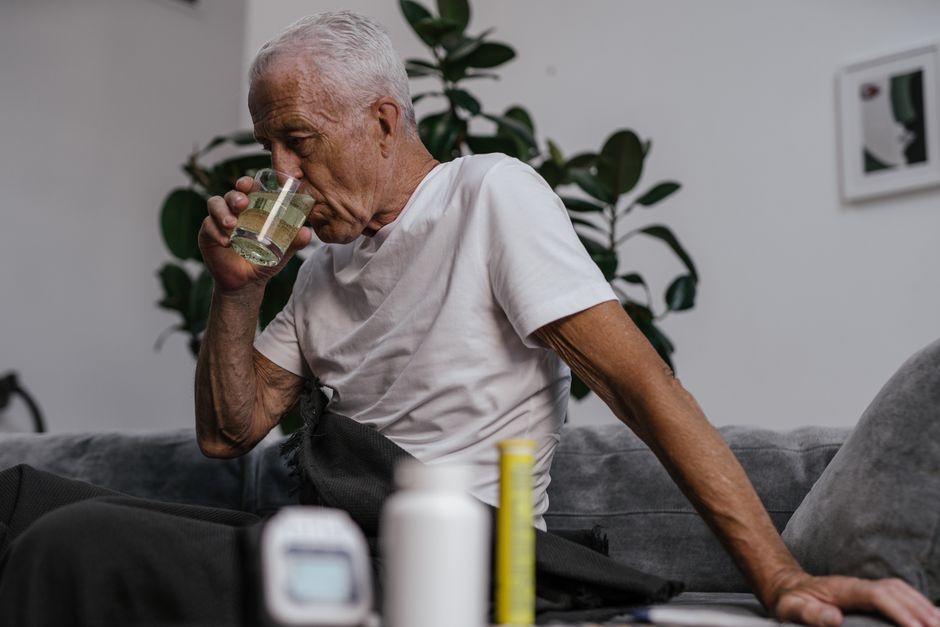
- You are over 65 or caring for a child under 2 who is vomiting repeatedly
Dehydration from vomiting sends about 200,000 Americans to the ER each year. Most of those visits are preventable with proper ORS use. But if you’ve tried the steps above and your symptoms worsen, don’t wait.
7. Recovery Accelerators: What Actually Speeds Healing
Once you’re past the acute phase (first 12-24 hours), a few things can help you bounce back faster.
Probiotics. A 2026 Cochrane review found that specific probiotic strains — particularly Lactobacillus rhamnosus GG and Saccharomyces boulardii — reduced the duration of vomiting and diarrhea by about 24 hours in children with acute gastroenteritis. For adults, the evidence is weaker but still positive. Culturelle Digestive Health (about $18 for 30 capsules) contains L. rhamnosus GG. Florastor (about $25 for 50 capsules) contains S. boulardii. Take one capsule daily for 5-7 days after symptoms resolve.
Sleep. Vomiting triggers a cortisol spike. Your body is in fight-or-flight mode. Sleep is the only way to reset the autonomic nervous system. Aim for 8-9 hours. Napping during the day is fine — your body needs the energy for gut repair.
Peppermint tea. Unlike ginger, peppermint is gentle on an already irritated stomach. A 2019 study in the Journal of Clinical Gastroenterology found that peppermint oil reduced nausea severity by 40% in post-operative patients. Steep one tea bag (like Traditional Medicinals Peppermint, about $5 per box) in 200 ml of hot water for 5 minutes. Drink between meals, not with food.
What does NOT help: Activated charcoal, apple cider vinegar, lemon water, or “detox” teas. These are trending on social media but lack evidence and can worsen dehydration or stomach irritation.
Here’s the bottom line. Wait 30 minutes before drinking. Use ORS, not sports drinks. Eat bland, low-fat foods starting at hour 6. Follow the 24-hour refeeding schedule. And know the red flags so you don’t waste time guessing when you need real medical help.
Medical Disclaimer: This content is for informational purposes only and does not constitute medical advice. Always consult a qualified healthcare professional before making health-related decisions.