How do you tell whether a bath gift set will genuinely help someone unwind — or just look good on a shelf for three months before getting quietly binned?
Most sets marketed as stress-relieving are packaging decisions, not formulation decisions. The box photographs well. The scent is pleasant in a candle shop. But once you dissolve those bath bombs in actual water and sit in them, the effect is roughly equivalent to a generic drugstore bubble bath at a tenth of the price.
This guide cuts through that. You will know exactly what ingredients to look for, which specific sets are worth buying at each price point, and the three mistakes that waste money on every occasion people buy these gifts.
What Actually Makes a Bath Relieve Stress
There are three real mechanisms at play when a bath genuinely lowers stress: thermal regulation, transdermal mineral absorption, and olfactory stimulation. All three require specific ingredients in specific concentrations — not a vaguely worded “calming blend” on a decorative label.
Why bath temperature matters more than anything you add to it
A bath at 38–40C (100–104F) activates the parasympathetic nervous system — the physiological state associated with rest and recovery. Core body temperature rises slightly during the soak, then drops sharply when you step out. That temperature drop mimics the natural cooling signal that initiates sleep onset. A 2018 review in Sleep Medicine Reviews found that passive body heating through warm baths 1–2 hours before bed measurably improved both sleep onset speed and sleep quality.
This means bath temperature is doing most of the work. Any set built around tiny bath bombs that dissolve in 90 seconds and don’t raise water temperature is, functionally, decoration.
The real story on magnesium absorption
Wellness brands overstate the transdermal magnesium case, but the mechanism is real in smaller doses. A 2017 pilot study in PLOS ONE recorded measurable increases in urinary magnesium after Epsom salt baths, confirming some absorption occurs. You will not fix a dietary deficiency with a bath. What magnesium sulfate (Epsom salt) reliably does is soften water, support skeletal muscle relaxation, and reduce minor inflammation. Sets containing 400g or more per bath use are worth prioritizing. Sets with 80g are performing the chemistry of stress relief without the dosage to back it up.
Aromatherapy: what the evidence actually says
Lavender essential oil (specifically Lavandula angustifolia) has the strongest research profile for anxiety reduction via inhalation. A 2015 meta-analysis in Evidence-Based Complementary and Alternative Medicine reviewed 15 clinical trials and found statistically significant reductions in anxiety across multiple populations. Bergamot and ylang-ylang have smaller but similar evidence profiles.
Synthetic fragrance labeled “lavender scent” or “relaxing floral blend” contains none of this. The active compounds — linalool and linalyl acetate — only exist in real essential oil. Check the ingredient list for Lavandula angustifolia listed individually. If the list shows “fragrance” or “parfum” without specifying the source, the aromatherapy story on the box is fiction.
Price Tiers: What the Money Actually Buys

Price tracks ingredient quality up to about $60. Above that threshold, you are mostly paying for packaging and brand margin.
| Price Range | Ingredient Quality | Typical Contents | Best Occasion |
|---|---|---|---|
| Under $25 | Synthetic fragrance, minimal Epsom salt, decorative focus | 2–3 small bath bombs, lotion, sometimes a cheap candle | Secret Santa, acquaintances |
| $25–$50 | Mix of real and synthetic ingredients, reasonable salt quantities | Bath soak 200–400g, essential oil blend, possible scrub | Birthdays, coworkers you actually like |
| $50–$85 | Real essential oils, 500g+ magnesium content, proper skin actives | Full bath soak, body oil or butter, curated scent profile | Close friends, partners, serious occasions |
| $85+ | Premium brand positioning, luxury packaging, sometimes organic certification | Multiple full-size products, structured ritual guide, gift box | High-end gifting, milestone moments |
The $50–$85 tier consistently delivers the best ingredient-to-price ratio. The gap between $85 and $130 rarely improves what goes in the water — it improves the box it arrives in.
The Ingredient Checklist to Run Before Buying Anything
Before any set reaches your cart, run through this list. Five or more ticks means the set is genuinely functional. Two or fewer ticks means it is a pleasant-smelling prop.
Ingredients worth paying for
- Magnesium sulfate (Epsom salt) — Minimum 400g per bath use. Dr. Teal’s Pure Epsom Salt Soaking Solution costs around $10 for 1.36kg and contains more usable magnesium than most $60 “luxury” sets.
- Lavandula angustifolia (lavender essential oil) — Must appear by botanical name in the ingredient list, not hidden inside “fragrance.”
- Magnesium chloride flakes — More water-soluble than sulfate, faster absorption. BetterYou Magnesium Flakes ($18 for 1kg) are the benchmark product in this category.
- Colloidal oatmeal — Clinically proven to reduce itch and inflammation. Valuable for stress-related skin flares and eczema. AVEENO Stress Relief Body Wash ($9) uses it as its primary active.
- Bergamot or ylang-ylang essential oil — Secondary aromatherapy actives with documented anxiety-reduction profiles.
- Sodium bicarbonate — Softens water, balances pH, gentle enough for daily use on sensitive skin.
- Jojoba or sweet almond oil — Prevents post-bath skin moisture loss without leaving a greasy tub ring.
Red flags that should kill the purchase
- “Fragrance” or “parfum” listed without naming essential oil sources
- Bath bombs under 80g each — the volume is too small to affect water composition
- No full ingredient list visible on the product page (a description is not a list)
- Artificial colorants such as FD&C Red 40 or Blue 1 — stain tubs and irritate sensitive skin
- Glitter in any bath product — microplastics, impossible to clean, no therapeutic function
Five Specific Sets Worth Buying Right Now
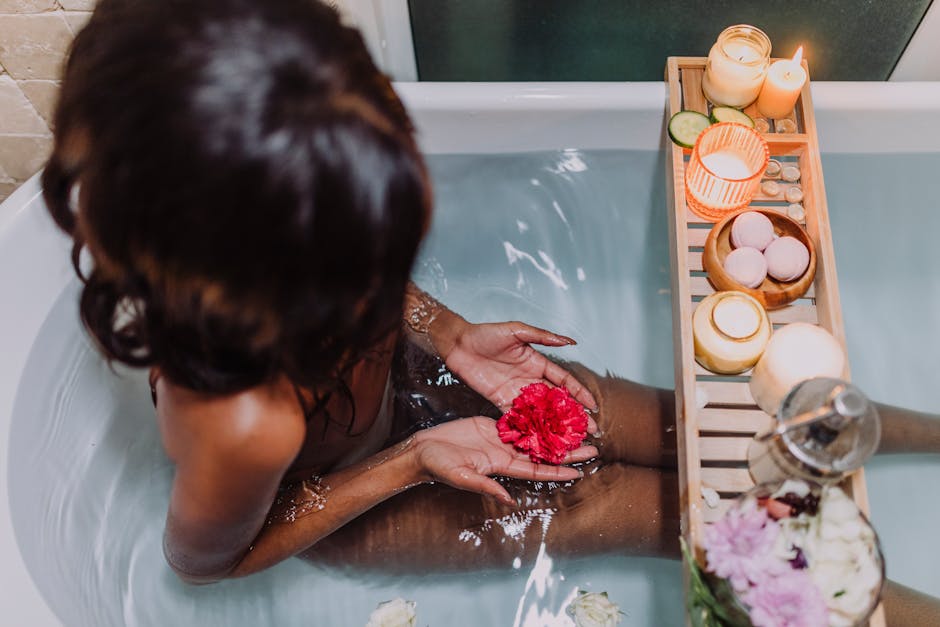
The best overall stress relief bath gift set available right now is the NEOM Organics Perfect Night’s Sleep Bath Foam ($44 for 200ml, or the gift edit at $65). Every ingredient has a function. The blend — lavender, chamomile, and patchouli essential oils — reaches the olfactory threshold needed for measurable relaxation response. The base hydrates without residue. Pair it with their Magnesium Body Butter ($38) and you have a complete, evidence-supported ritual that does not feel assembled from a gift shop clearance display.
Best budget pick: Dr. Teal’s Lavender Gift Set ($22–$30)
Dr. Teal’s consistently outperforms its price point because Epsom salt is inexpensive to produce and they use a serious quantity of it. A standard Dr. Teal’s gift set includes a 3lb (1.36kg) Epsom salt soak, foaming bath, and body lotion. The lavender version lists Lavandula angustifolia oil on the label — real essential oil, not synthetic fragrance. For a $25 budget, nothing available through major UK or US retailers beats it on actual therapeutic content.
Best mid-range pick: Sanctuary Spa Wellbeing Escape Gift Set ($45–$55)
Available through AWIN retail partners and major department stores, Sanctuary Spa’s Wellbeing gift sets land in the $45–$55 range and include full-size bath soak (500ml), body scrub, and body butter. The formulation uses vetiver and bergamot essential oils rather than a synthetic blend. The packaging is presentable without being wasteful. For a birthday or “thinking of you” occasion, this is the set to send without hesitation. It photographs well, smells like real botanicals, and the recipient can use every product in it.
Best premium pick: Aromatherapy Associates Relax Bath and Shower Oil ($57 for 55ml, gift version $85)
Expensive for the volume. But the essential oil concentration is higher than almost anything else on the market. Their Relax blend — vetivert, chamomile, bergamot — is the product most frequently cited by clinical aromatherapists for acute stress management. You need 10ml per bath, so a 55ml bottle delivers five full treatments. The $85 gift version adds a rollerball and travel size. This is the right choice for someone dealing with a genuine stress problem, not someone who just enjoys nice bath products.
Best for sensitive skin: Herbivore Botanicals Calm Ritual Set ($68)
Fragrance-free, essential-oil-free, dye-free. The set includes a colloidal oatmeal bath soak, hemp seed body oil, and a blue tansy face mask. The ingredient list is the cleanest in this price range. If the person you are buying for has eczema, rosacea, perioral dermatitis, or any documented fragrance sensitivity, this is the only pre-built set at this price point safe to give them. Every other set contains botanical allergens that can trigger a reaction even when the fragrance source is natural.
When to Skip the Gift Set Entirely
If the recipient has a documented fragrance allergy or severe eczema, no pre-assembled set is safe — even “natural” ones carry real allergen risk from botanical extracts. Build a custom set instead: BetterYou Magnesium Flakes + a fragrance-free bath oil + an unscented muslin cloth. Less photogenic. Actually usable.
The Questions Most Buyers Get Wrong
Do bath bombs actually do anything therapeutic?
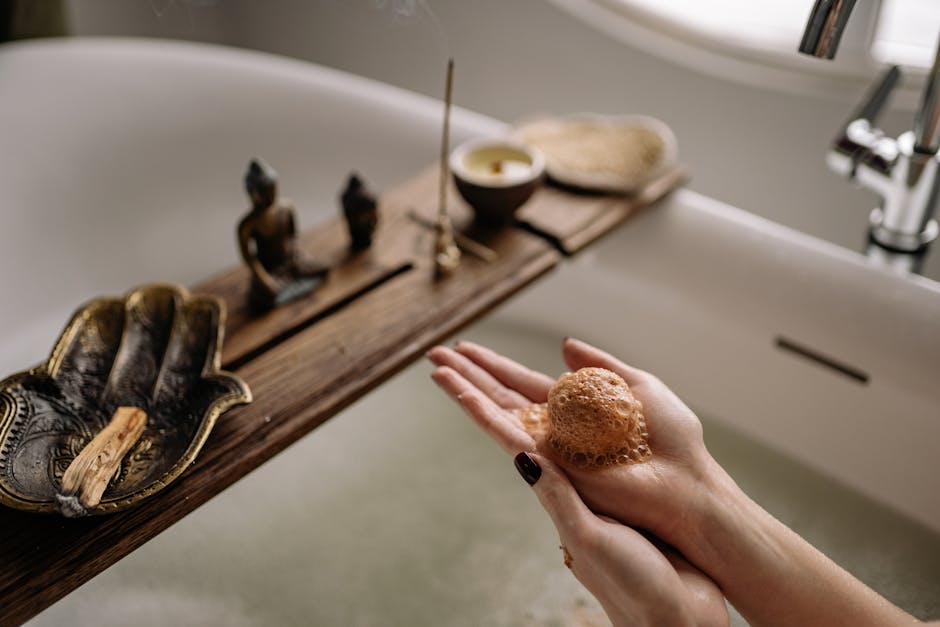
Mostly no. The majority are baking soda, citric acid, synthetic fragrance, and colorant. The fizz is a straightforward acid-base reaction — entertaining, not therapeutic. For a bath bomb to deliver real benefit, it needs to be 100g or larger, contain real essential oils at functional concentration, and include Epsom salt or magnesium chloride as a core ingredient. Sets built around six small bombs at 40g each are style over substance every time.
Does a higher price reliably mean better ingredients?
Between $15 and $60, yes — price and ingredient quality are reasonably correlated in this category. Above $60, the correlation breaks down. You are paying for the experience of buying the brand, the cost of the packaging, and the retail margin of a premium positioning strategy. The $10 Dr. Teal’s soak contains more bioavailable magnesium than most $70 sets. Buy based on the ingredient list, not the box.
What about CBD bath products?
Not worth the premium. Transdermal CBD absorption in direct topical application is already low. In a bath, the dilution makes absorption effectively negligible — there is no delivery mechanism that gets meaningful CBD concentration past the skin barrier when it is dispersed through 150 litres of water. CBD bath bombs are a marketing story supported by no credible mechanism. This Works Deep Sleep Pillow Spray ($29) is a better use of the same budget if sleep support is the actual goal — it uses lavender and chamomile extracts in direct inhalation delivery, which has a documented mechanism and consistent user outcomes.
How to Build a Better Set for Under $40
Every pre-built set has at least one compromise. If you want full control over what goes in it, here is a complete stress relief bath set assembled from individual components for under $40:
- BetterYou Magnesium Flakes, 1kg ($18) — the mineral base. Use 250g per bath; one bag provides four full treatments.
- Tisserand Lavender Essential Oil, 9ml ($8) — certified pure Lavandula angustifolia. Add 6–8 drops per bath, mixed into the flakes before dissolving.
- E45 Moisturising Bath Oil, 500ml ($7) — fragrance-free, dermatologist-tested, prevents post-bath moisture loss without tub residue.
- Wrap in kraft paper or a linen bag. Add a handwritten note with the water temperature recommendation (39C, 1–2 hours before bed).
Total cost: around $33. Better functional ingredients than 90% of gift sets at twice the price. The only thing it is missing is a brand name — which only matters to the person buying it, never to the person using it.
Magnesium content is the single variable that separates a genuinely useful stress relief bath gift from an expensive room decoration — get that right and everything else follows.
Medical Disclaimer: This content is for informational purposes only and does not constitute medical advice. Always consult a qualified healthcare professional before making health-related decisions.