
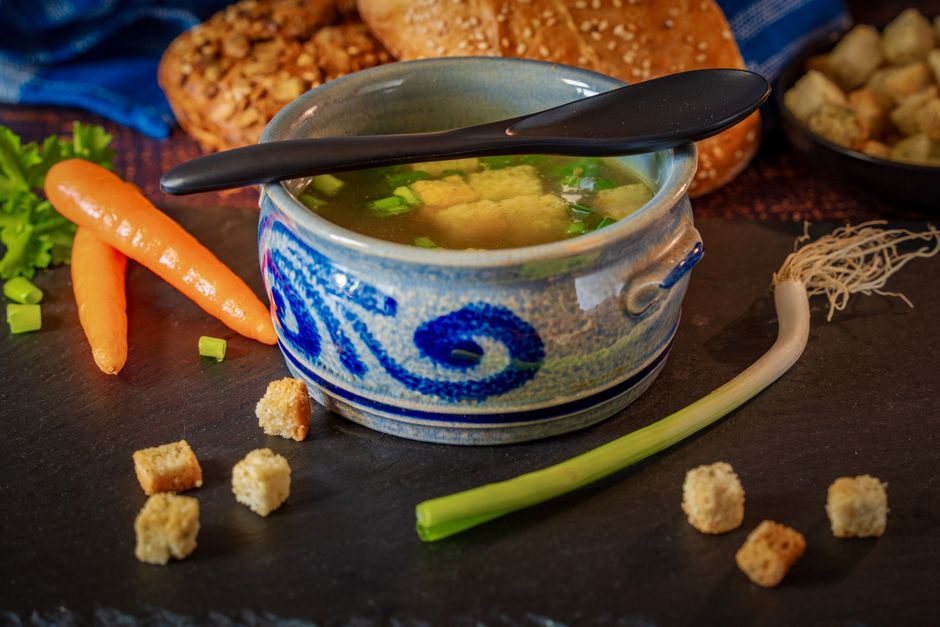
Good winter soup should do more than warm your hands. It should deliver vegetables, protein, fibre, and enough energy to keep a family satisfied until the next meal. The best bowls are simple, affordable, and sturdy enough for picky eaters.
What Makes a Winter Soup Healthy for the Whole Family?
The best family soup has three anchors: protein, produce, and a filling carbohydrate. Remove one and the bowl often becomes a snack disguised as dinner. Broth with a few carrots tastes pleasant, but it will not hold a hungry teenager for long.
Start with a real protein source
Beans, lentils, chicken, turkey, tofu, and eggs all work. Aim for roughly 15 to 25 grams of protein per adult serving when soup is the main meal. A pot made with one cup of dry lentils can feed several people while adding fibre and plant protein. Shredded chicken works faster, but use cooked chicken that you already have rather than buying special ingredients.
Add vegetables in two stages
Hard vegetables such as onions, carrots, celery, sweet potatoes, and squash need time to soften. Add quick-cooking vegetables such as spinach, peas, corn, or chopped courgette near the end so they keep some colour and texture. Frozen vegetables are a smart choice. They cost less, create less waste, and usually need only a few minutes in the pot.
Give the soup enough staying power
Barley, brown rice, potatoes, whole-grain pasta, and beans make soup more filling. Keep cream, cheese, and large amounts of oil in supporting roles. A thick soup does not automatically offer better nutrition. A puréed potato soup can contain more calories and less protein than a chunky bean and vegetable soup. My clear verdict: for a family dinner, choose a soup with beans or lean meat, at least two vegetables, and one measured serving of whole grains or potatoes.
Build a Balanced Soup Bowl in 30 Minutes

Use this order and stop guessing. It works for homemade soup, leftovers, and a nearly empty refrigerator.
- Pick the liquid. Use 4 cups of low-sodium broth, water mixed with broth, crushed tomatoes, or a combination. Start with less salt than you think you need. You can add more later.
- Add two or three vegetables. Use about 4 cups total. A reliable mix is onion, carrot, and frozen spinach. Another is tomato, courgette, and corn.
- Pick one filling carbohydrate. Add 1 cup of cooked barley or rice near the end, or simmer 1 cup of diced potatoes in the broth. Do not add several starches at once unless you want a very thick stew.
- Finish with acid and herbs. A squeeze of lemon, 1 tablespoon of vinegar, parsley, cilantro, garlic, or black pepper can wake up a bland pot without another teaspoon of salt.
Cook onions and carrots in 1 tablespoon of oil for five minutes. Add broth, protein, and firm vegetables. Simmer until the vegetables are tender, then add quick-cooking ingredients. Taste only after the soup has simmered. Salt becomes more noticeable as liquid evaporates.
Serve children a small portion first, with bread, fruit, or yogurt on the side. This reduces the pressure to finish a large bowl and gives cautious eaters a familiar food. The winning approach is a flexible pot, not a complicated recipe.
How to Fix Soup That Is Too Salty, Thin, or Heavy

Soup problems usually come from one of three mistakes: concentrated ingredients, weak structure, or too much richness. Each problem has a direct fix.
What should you do with salty soup?
Do not throw a potato into a salty pot and expect magic. A potato absorbs water and flavour together, so it rarely removes enough sodium to solve the issue. Add unsalted broth or water, then increase the amount of vegetables, beans, rice, or shredded chicken. A spoonful of lemon juice can sharpen the flavour, but acid does not remove salt. If the pot is still too salty, freeze half and combine it later with a fresh, unsalted batch.
How do you thicken watery soup?
First, simmer it uncovered for 10 to 15 minutes. If the ingredients are already cooked, blend one cup of beans, vegetables, or potatoes and return the purée to the pot. This adds body without relying on heavy cream. A cornstarch slurry works quickly, but it can create a glossy texture and adds little nutrition. Use it only when speed matters more than substance.
How do you lighten a heavy soup?
Remove visible fat, add broth, and fold in greens or beans. For creamy soups, replace part of the cream with plain Greek yogurt after the pot comes off the heat. Never boil yogurt aggressively or it may split. The clear winner for everyday family cooking is the blended-vegetable fix: it improves texture, adds produce, and does not cover up a badly salted base.
Which Soup Base Wins: Broth, Tomato, or Bean?
Bean-based soup wins for a complete family dinner. It gives you protein, fibre, thickness, and a mild flavour that accepts vegetables, herbs, and grains. Broth-based soup is lighter and faster, while tomato-based soup offers strong flavour with little work. Each base solves a different problem, but only one consistently carries the whole meal.
Choose broth when speed matters
Broth works best for chicken noodle soup, vegetable soup, and quick leftover meals. Use 4 cups of low-sodium broth for four servings, then add protein and vegetables. The main failure mode is building a pot of seasoned water. Include chicken, beans, tofu, or an egg so the soup has a real centre. Add noodles near the end because they absorb liquid and turn soft during storage.
Choose tomato when vegetables need help
Crushed tomatoes create a bold base for white beans, chickpeas, lentils, and pasta. Their acidity balances sweet vegetables such as carrots and squash. Add a pinch of baking soda only if the soup tastes sharply acidic, and use very little because too much creates a flat, soapy flavour. Tomato soup pairs well with grilled cheese, but tomato soup alone is rarely enough for a full dinner.
Choose beans when fullness matters
Blend half the beans and leave the rest whole. The blended portion thickens the pot, while the whole beans give it texture. Add kale, carrots, onion, and a small amount of potato for a cold-weather meal that holds well in the refrigerator. My verdict is firm: use bean soup as the default family dinner, broth soup for a fast lighter meal, and tomato soup as a flavourful base that needs a protein partner.
When Soup Is the Wrong Dinner
Soup is not automatically healthy, and it is not always the right tool. Skip a large bowl of watery broth when someone needs a higher-calorie meal after illness, intense exercise, or a long day of physical work. Add bread, rice, eggs, beans, or a sandwich instead. A small child who cannot manage chunky textures may need a smoother purée and a separate finger food.
When should you avoid packaged soup?
Avoid it when the label shows a very small serving size, little protein, and sodium that takes up most of the daily limit. Do not buy a family-size carton simply because it looks economical if nobody will eat the leftovers. Food waste is not a bargain.
What common mistake ruins a healthy soup plan?
Making soup the only food on the plate. Add a clear side: fruit, whole-grain bread, yogurt, or a simple salad. This gives the family more texture and helps children find something familiar.
What is the final recommendation?
Make one pot of lentil and vegetable soup each week, keep low-sodium broth and frozen vegetables available, and reserve packaged soup for rushed nights. For most families, that combination delivers warmth, fibre, protein, and realistic convenience without pretending a can of seasoned broth is a complete meal.
Always consult a qualified healthcare professional before making health-related decisions.